
A standard aerosol can solve many everyday problems. But industrial work is rarely everyday. A lubricant that performs well in a mild workshop may behave very differently on a hot rooftop chiller. An anti-rust spray that suits indoor parts may not protect equipment near the coast.
That is where custom formulation comes in. This guide explains what it means, when it makes sense, and what to prepare before you approach a manufacturer. Use it as an industrial aerosol buyers guide.
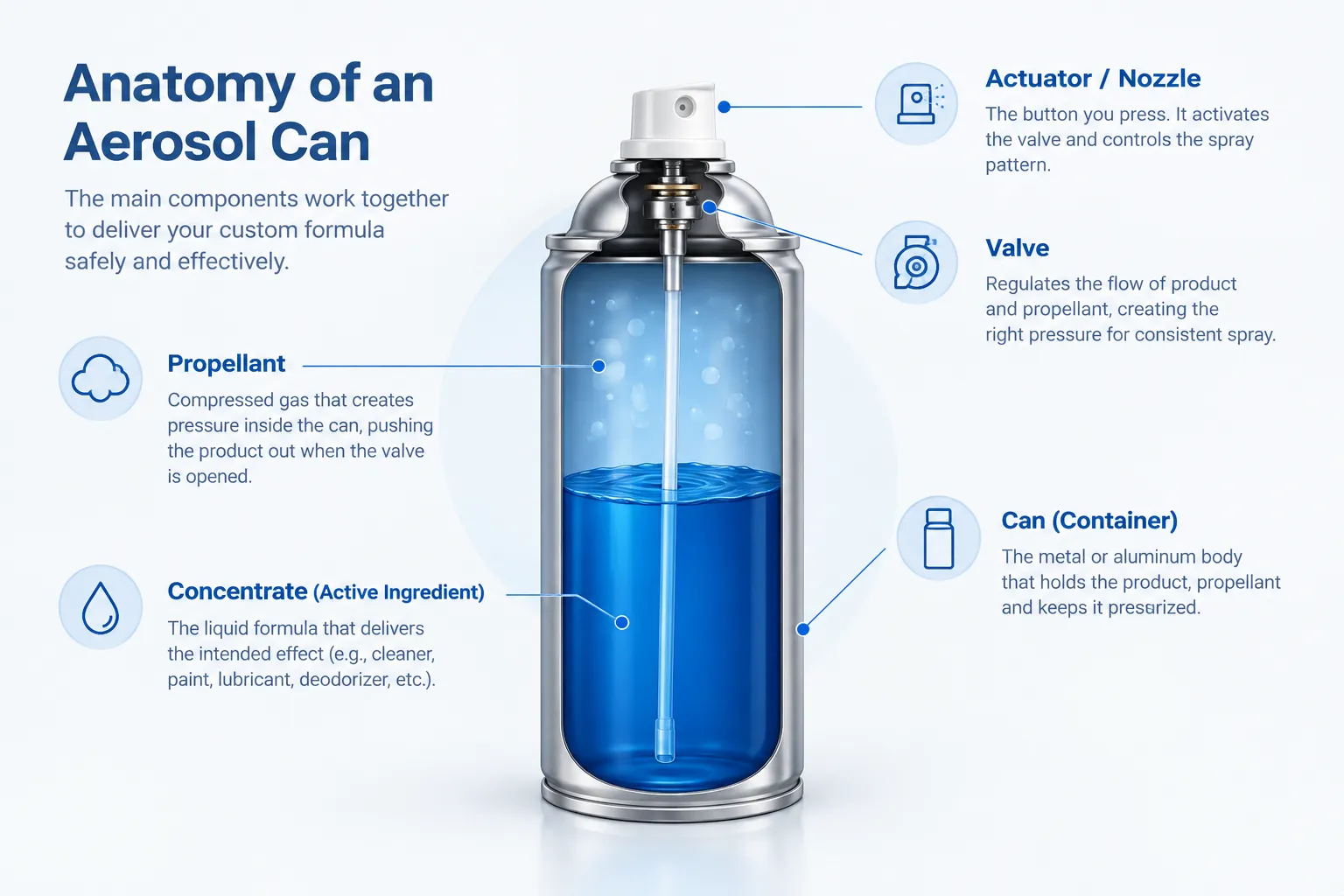
What Does “Custom Formulation” Actually Mean?
An aerosol product has four main parts: the active concentrate (the liquid that does the work), the propellant, the can, and the valve and actuator. A custom formulation adjusts one or more of these to fit your exact application.
That can mean changing the performance of the concentrate, such as how well it penetrates, lubricates, cleans, or protects. It can also mean changing the spray pattern, the can size, or the label. The goal is a product that fits your job, not one that is “good enough” for many jobs.
When a Standard Product Is Not Enough
Off-the-shelf products are built for the average user. You may need a custom option when:
- The environment is demanding. High heat, humidity, dust, and salt air are common across the UAE. They affect how a product performs and how long protection lasts.
- The material matters. Some formulations are not suitable for certain plastics, rubbers, or coatings.
- You need consistency. Large operations want the same result in every can, every batch.
- You are building a brand. Distributors and brand owners often want a unique product under their own label, which is where a private label aerosol manufacturer or an OEM aerosol manufacturer comes in.
Real-world examples
- Automotive workshops and fleets. Teams may need a penetrating lubricant for seized fasteners, a degreaser for engine bays, or a rust protector for underbody parts. Each job has different needs, and a single general-purpose spray rarely does all of them well.
- Facilities and MEP maintenance. Technicians servicing HVAC units, hinges, locks, and electrical panels often need sprays with specific properties. Examples include a contact cleaner that leaves little residue, or a lubricant that stays in place on outdoor equipment.
- Manufacturing and metalworking. Production lines may use release agents, protective films, or cleaning sprays suited to particular metals and processes.

Common Types of Industrial Aerosols
Custom projects often fall into these groups:
- Lubricants and penetrating oils
- Anti-rust and corrosion protection sprays
- Degreasers and industrial cleaners
- Contact and electrical cleaners
- Protective and release-agent sprays
What to Define Before You Request a Formulation
A clear brief saves time and avoids costly changes later. Prepare the points below:
- The application. What job should the product do, and on what surface or part?
- The operating environment. Temperature range, humidity, outdoor or indoor use, exposure to chemicals or salt.
- Material compatibility. Metals, plastics, rubbers, or coatings the product will touch.
- Performance expectations. For example, how long protection should last, or how clean a surface must be afterward.
- Spray and packaging needs. Can size, nozzle type, spray pattern, and labeling language.
- Order volumes. Expected quantities and how often you will reorder.
Planning a custom aerosol for your business?
Tell our team about your application, and we will help you define the right approach. Request a free consultation with our experts and get practical guidance before you commit to development.
Contact Alqaed →
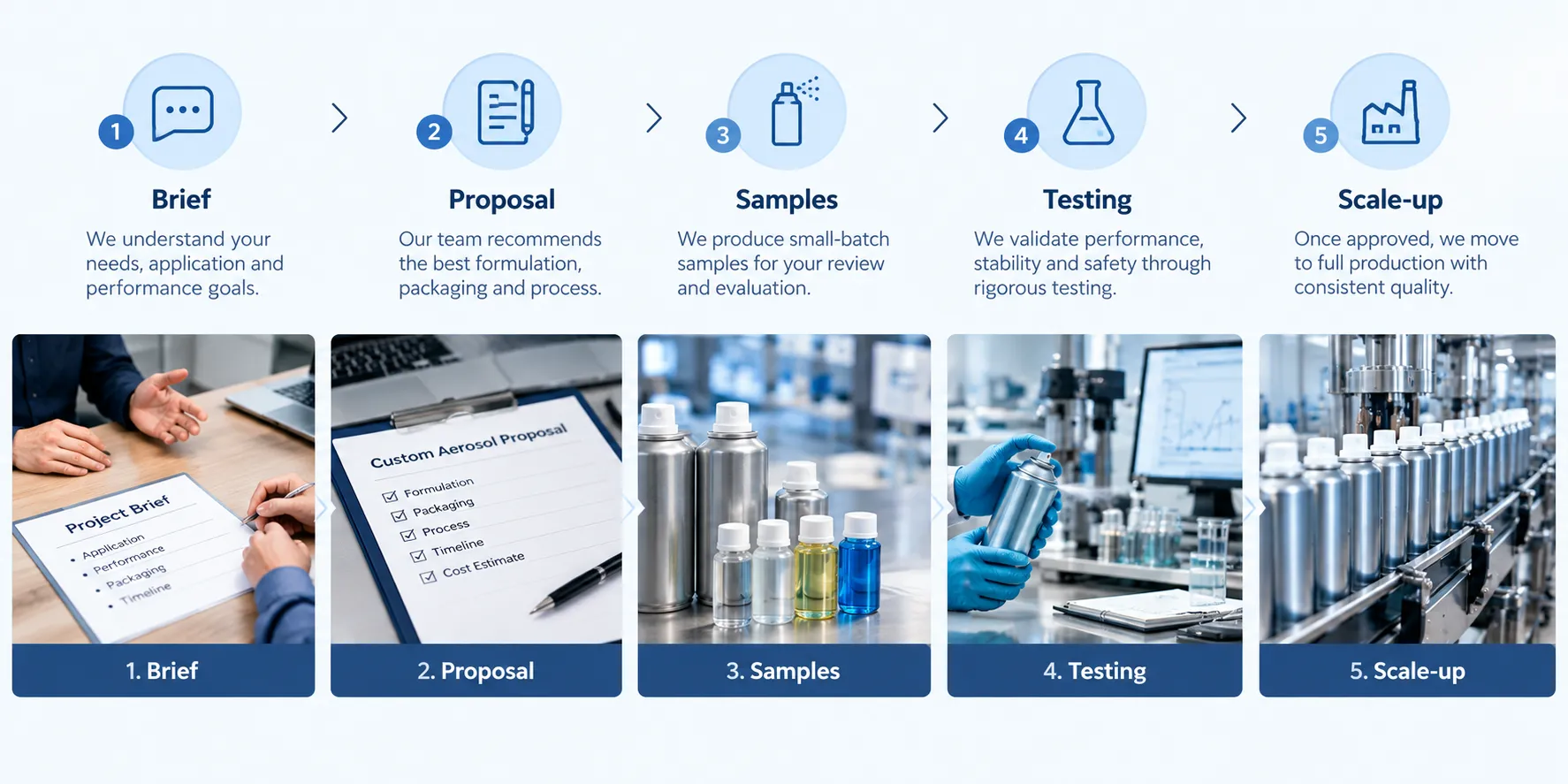
How the Development Process Usually Works
While every project differs, most follow a similar path:
- Brief. You share your application and requirements.
- Proposal. The manufacturer recommends an approach and the practical options.
- Samples. Trial units are produced for you to test.
- Testing and adjustment. You test in real conditions, then refine based on results.
- Scale-up. Once approved, production moves to full batches.
Real-world testing matters. Samples tested in your actual conditions give far better answers than assumptions.
Safety and Compliance Come First
Aerosols are pressurized products, and many contain flammable ingredients. A responsible manufacturer will provide a Safety Data Sheet (SDS) and clear labeling, and will follow the safety and regulatory requirements that apply to your market. Ask for documentation early, and confirm that handling, storage, and transport instructions are clear.
Questions to Ask a Potential Manufacturer
- Do you support custom development, or only standard products?
- How are samples produced and tested?
- What documentation do you provide with each product?
- What are the minimum order quantities?
- Can you support private label packaging and custom labels?
- How do you handle quality checks between batches?
Case Study: Reformulating for Extreme Heat
Theory is one thing, but field performance is what matters.
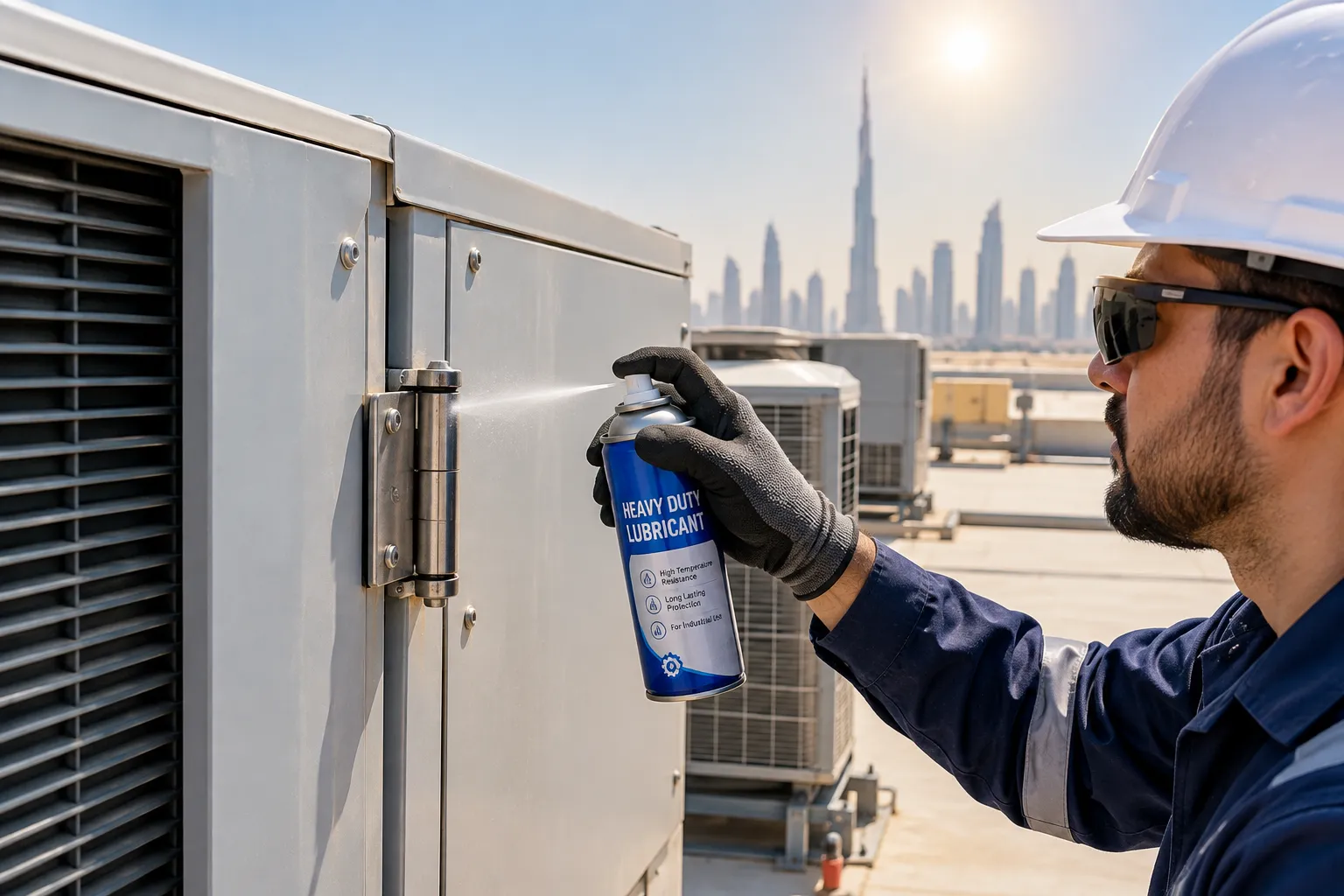
Recently, a maintenance contractor in Dubai approached us with a recurring problem: their standard penetrating lubricant was evaporating too quickly when applied to outdoor HVAC units and heavy-duty hinges during the 45°C summer months. The lubrication failed prematurely, leading to seized parts and costly downtime.
Our lab developed a custom formulation using a higher-viscosity base oil and a heat-resistant carrier solvent. We also adjusted the propellant ratio to ensure a consistent spray pattern even when the can itself was exposed to elevated warehouse temperatures.
After a month of field testing in peak summer, the client reported zero seized hinges and reduced their reapplication cycle by 30%.
This is the practical value of a custom industrial aerosol: it solves the exact problem your environment creates.
Get an Aerosol That Works in Your Real Conditions
Custom formulation is not about complexity. It is about getting a product that works where you actually use it. A clear brief, realistic testing, and an open conversation with your manufacturer lead to better results and fewer surprises.
If you are comparing suppliers, start with our industrial aerosol supplier page to see how Alqaed can support your project.
Frequently Asked Questions
What is a custom aerosol formulation?
It is an aerosol product adjusted to a specific application. Adjustments can cover the active liquid, the spray pattern, the packaging, or the label, so the product fits your needs rather than a general market.
Which industries benefit most from custom industrial aerosols?
Automotive, facilities and MEP maintenance, manufacturing, and metalworking often benefit, as well as distributors who want products under their own brand.
What information do I need before requesting a custom formulation?
Prepare your application, operating environment, material compatibility, performance expectations, packaging preferences, and expected order volumes.
Can I get samples before placing a full order?
Most custom projects include a sampling and testing stage. Confirm sample availability and terms with your manufacturer at the start.
Can I sell a custom aerosol under my own brand?
Yes, in many cases. Private label and OEM arrangements let you use your own packaging and labels. Discuss branding requirements early in the project.
How do I know a custom aerosol is safe to use and transport?
Ask for the Safety Data Sheet and check that labels carry clear hazard and handling information. Make sure storage and transport guidance matches your local requirements.
How long does custom development take?
It depends on the complexity of the product and the testing needed. Your manufacturer can give a realistic timeline once they understand your brief.