
Every aerosol can depends on one component the user never sees: the propellant. It is the force that pushes the product out of the can and shapes how it is delivered, whether as a fine mist, a dense foam or a steady spray. Among the most widely used propellants are hydrocarbon gases, mainly butane, propane and isobutane.
If you are developing an aerosol product, choosing the right propellant affects performance, cost, packaging and compliance. This guide explains what these propellants are, how butane and propane differ, and which safety standards matter.
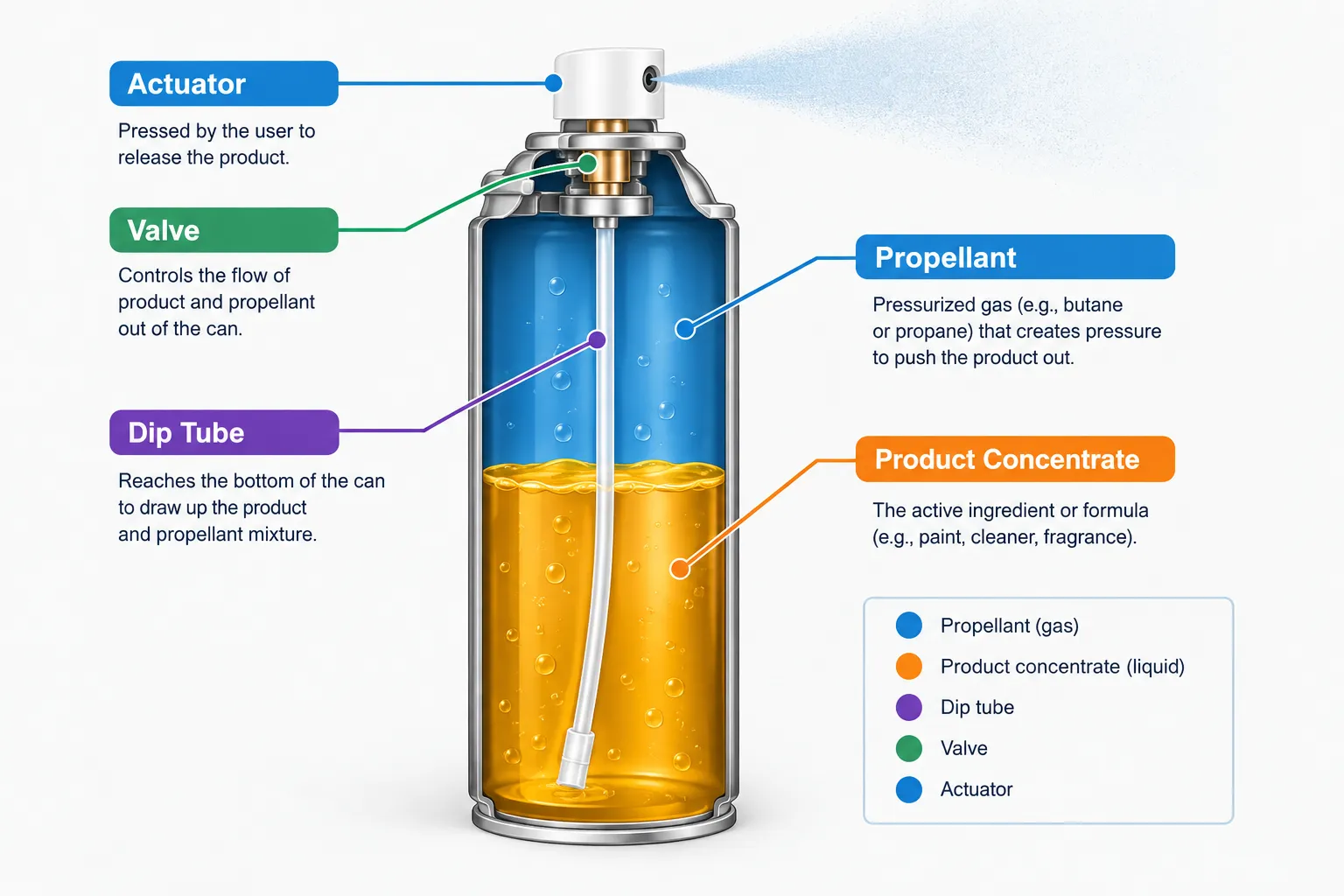
What Does an Aerosol Propellant Do?
An aerosol can holds two things: the product (the “concentrate”) and the propellant. Inside a sealed, pressurised container, the propellant creates the pressure that forces the product out when the valve is pressed.
Propellants fall into two broad groups:
- Liquefied gas propellants, such as butane, propane, isobutane and dimethyl ether (DME). These are stored as a liquid under pressure and turn to gas as the can empties, which helps keep the pressure fairly consistent.
- Compressed gases, such as nitrogen and carbon dioxide. These remain gaseous, so pressure drops as the contents are used.
Hydrocarbon propellants are popular because they are efficient, widely available and compatible with many formulations, including air fresheners, deodorants, hair sprays, paints, lubricants and household insecticides.
What Is Butane as an Aerosol Propellant?
Butane is a hydrocarbon gas that exists in two forms: normal butane (n-butane) and isobutane. Both are liquefied under moderate pressure, which makes them practical for filling and storage.
Key characteristics of butane-based propellants:
- Lower vapour pressure, which gives a softer, gentler spray.
- Good solvency for many formulations.
- Suitability for products where a fine, controlled discharge is wanted.
Isobutane is especially common in personal care and household aerosols because of its stable performance and relatively low pressure.
What Is Propane as an Aerosol Propellant?
Propane is a lighter hydrocarbon with a much higher vapour pressure than butane. It boils at a very low temperature, so it generates strong pressure inside the can.
Key characteristics of propane:
- Higher internal pressure, producing a stronger, faster discharge.
- Better performance in colder conditions, because it vaporises more readily at low temperatures.
- Commonly blended with butane to reach a target pressure.
Because pure propane creates high pressure, it is rarely used on its own for consumer aerosols. It is far more often combined with butane or isobutane.
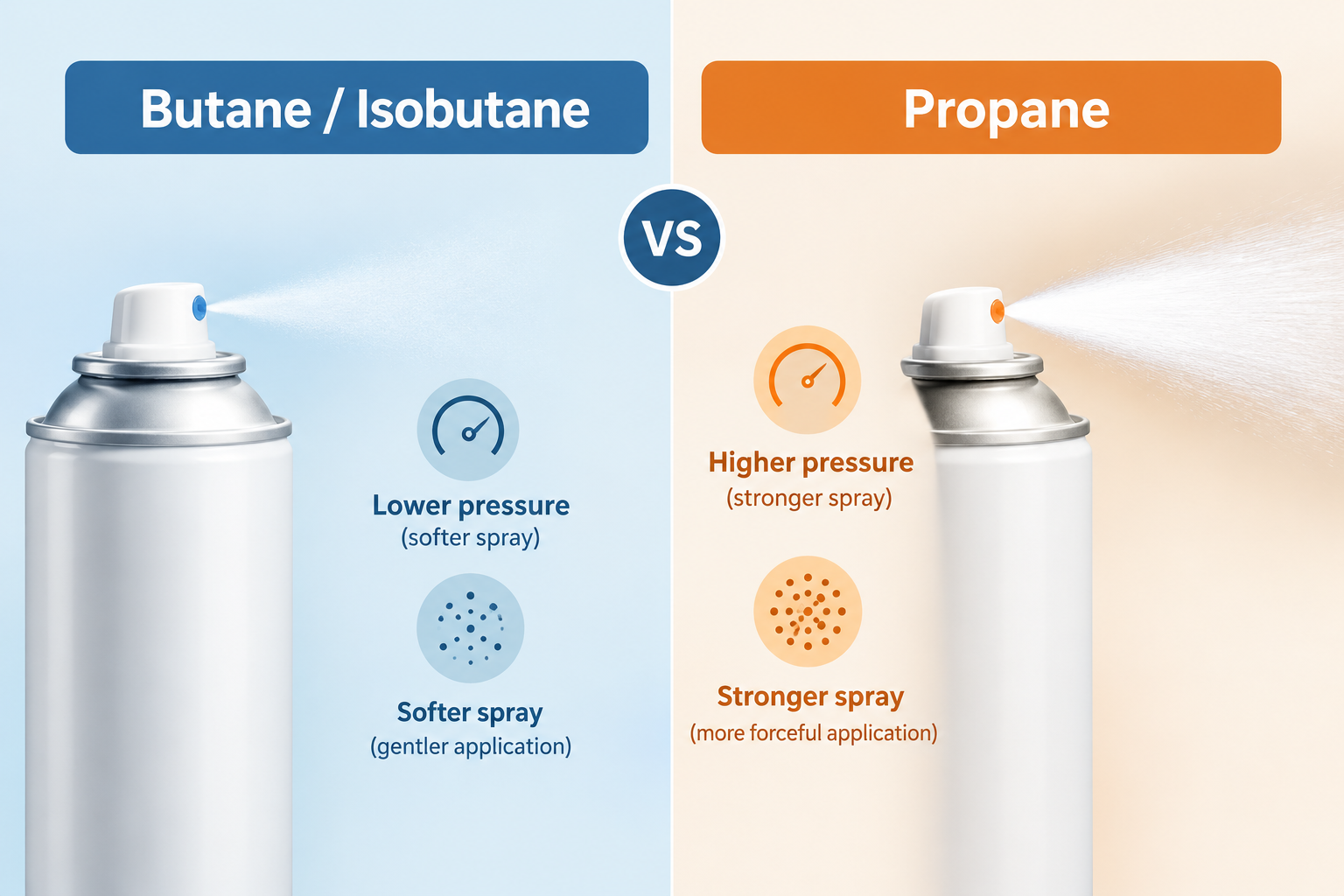
Butane vs Propane: Key Differences
| Feature | Butane / Isobutane | Propane |
| Vapour pressure | Lower | Higher |
| Spray character | Softer, finer | Stronger, faster |
| Cold-weather performance | Weaker | Stronger |
| Typical use | Used alone or in blends | Mostly used in blends |
| Container demands | Standard aerosol pressure range | Requires containers rated for higher pressure |
The practical takeaway is that the choice is rarely “butane or propane.” Manufacturers usually blend the two to reach a specific pressure. Industry blends are often described by their pressure rating, and the right balance depends on the product type, valve and actuator design, can specifications and the climate where the product will be sold.
Need help choosing the right propellant for your product?
Our team works with brands on formulation, filling and packaging decisions every day. Contact Alqaed for a free consultation with our experts and get clear, practical guidance for your project.
Why Propellant Choice Affects Your Product
The propellant influences more than pressure:
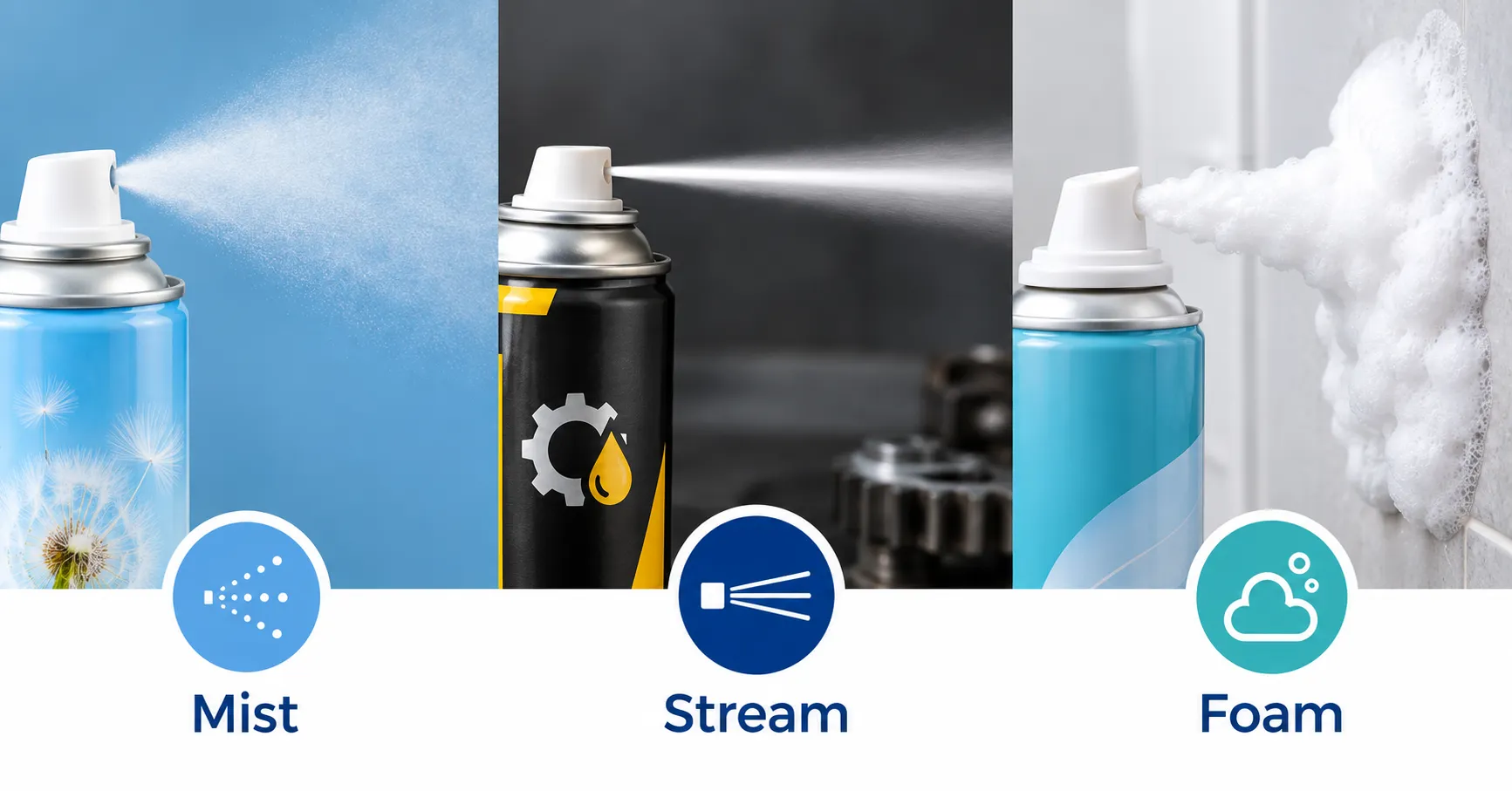
- Spray pattern and particle size: the pressure and the formulation together decide whether the output is a mist, a stream or a foam.
- Product compatibility: the propellant must work with the concentrate without harming its stability or quality.
- Container and valve selection: higher-pressure blends need cans and valves designed for them.
- Regional conditions: high ambient temperatures, such as those in the Gulf region, call for careful pressure planning during formulation and testing.
For example, camping and portable cooking products rely on butane-based gas with specific pressure and safety requirements. If you work in that segment, see our camping gas manufacturing capabilities.
Safety Standards for Aerosol Propellants
Butane, propane and isobutane are flammable. Safe production, storage, transport and use therefore depend on following recognised standards and regulations. Without making claims beyond what applies, these are the main areas involved:
- Flammability classification and labelling
Aerosols containing flammable propellants are classified and labelled under hazard communication systems such as the Globally Harmonized System (GHS). Labels should carry the correct pictograms, signal words and precautionary statements. - Container and pressure requirements
Aerosol containers must be designed to withstand internal pressure, including at elevated temperatures. Regulations in major markets, such as the EU Aerosol Dispensers Directive, set out requirements for dispensers and their testing. - Safe filling and handling
Filling flammable gases requires controlled environments, proper ventilation, leak detection, grounding to control static electricity, and trained personnel. - Storage and transport
Flammable aerosols have specific storage and transport rules, including limits on temperature, ventilation and quantity. Local civil defence and transport regulations apply in the UAE. - Consumer safety information
Clear instructions protect end users. Typical warnings include:
- Keep away from heat, flames and sparks
- Do not spray near open flames
- Do not puncture or burn the can, even when empty
- Do not expose to direct sunlight or temperatures above the stated limit
- Use in well-ventilated areas
Regulations differ by country, so it is important to confirm the requirements for each market where your product will be sold.
How to Choose the Right Propellant
When planning an aerosol product, consider these questions:
- What spray type do you need: mist, stream or foam?
- What formulation will the propellant be mixed with?
- What climate will the product be used and stored in?
- Which markets will you sell in, and what regulations apply there?
- Which can, valve and actuator combination suits your pressure target?
Answering these early helps avoid costly redesigns later.
Frequently Asked Questions
What is the main difference between butane and propane in aerosols?
Propane has a much higher vapour pressure than butane, so it produces a stronger discharge. Butane and isobutane give a lower pressure and a softer spray. Many products use a blend of both.
Is butane or propane safer for aerosol products?
Neither is “safe” on its own terms, since both are flammable. Safety depends on proper formulation, correct container specifications, safe filling practices, accurate labelling and following the regulations that apply to your market.
Why are butane and propane blended?
Blending lets manufacturers reach a precise pressure suited to the product, valve and container. Adjusting the ratio changes the spray behaviour and pressure profile.
What is isobutane, and how is it different from butane?
Isobutane is a structural variant of butane with slightly different properties. It is widely used in personal care and household aerosols because it offers stable, relatively low-pressure performance.
Are hydrocarbon propellants flammable?
Yes. Butane, propane and isobutane are flammable gases, so aerosols using them must be classified, labelled, stored and transported according to the relevant flammability regulations.
Can I use compressed gases instead of hydrocarbons?
Yes, for some products. Compressed gases such as nitrogen or carbon dioxide are non-flammable but lose pressure as the can empties, which may affect spray consistency. The right choice depends on the product.
What safety information should appear on an aerosol label?
Labels should include the hazard pictograms, signal word, precautionary statements, usage instructions and storage warnings required in the target market.
How do I know which propellant suits my product?
It depends on your formulation, desired spray type, packaging and target market. Consulting an experienced aerosol manufacturer early helps you make the right decision.
Choose Your Propellant with Safety First
Butane and propane are the backbone of many aerosol products, and understanding their differences helps you make better formulation and packaging choices. Whatever propellant you choose, safety, correct labelling and regulatory compliance must come first.
Ready to develop or scale your aerosol product? Contact the Alqaed team for a free consultation and discuss your project with our experts.