Choosing an aerosol manufacturer is a bigger decision than comparing quotes. Your product is pressurized, often flammable, and in many cases applied to skin, surfaces, or the air your customers breathe. A factory’s certifications are the quickest way to see whether it runs on documented, audited systems or on habit. At Alqaed, we believe buyers should always ask to see this proof before choosing a partner.
This guide explains which certifications matter when evaluating an aerosol factory in the UAE, what each one tells you, and how to verify them before you sign a contract.
Why Certifications Matter in Aerosol Manufacturing
Aerosol production combines chemistry, pressure, and precision filling. A small deviation in valve crimping, propellant ratio, or batch cleanliness can lead to leaks, inconsistent spray performance, or safety incidents. Certifications show that a third party has reviewed the factory’s processes and found them structured, repeatable, and traceable.
For brand owners, this translates into:
- Consistent quality from the first batch to the hundredth
- Traceability if a problem ever needs to be investigated
- Smoother market entry, since distributors, retailers, and regulators often ask for documentation
- Lower risk of recalls, delays, and rejected shipments
These benefits are especially important if you plan to outsource production. A certified partner makes aerosol contract manufacturing far less risky, because your product is made under documented and auditable systems.
ISO Certifications to Look For
ISO standards are international frameworks that audit how a company manages its processes. These are the ones most relevant to aerosol manufacturing.
ISO 9001: Quality Management
ISO 9001 is the baseline. It confirms the factory has a documented quality management system covering production control, supplier management, corrective actions, and continuous improvement. If a manufacturer has no quality management certification at all, treat it as a warning sign.
ISO 14001: Environmental Management
Aerosol production involves solvents, propellants, and packaging waste. ISO 14001 shows that a factory monitors its environmental impact and manages emissions and waste in a structured way. It matters most if your brand has sustainability commitments or sells into markets with strict environmental expectations.
ISO 45001: Occupational Health and Safety
Working with pressurized and flammable materials requires disciplined safety management. ISO 45001 indicates the factory has formal systems to protect its workforce and prevent incidents, which is closely linked to reliable, uninterrupted production.
ISO 22716: Cosmetics GMP
If you plan to produce cosmetic aerosols such as body sprays, deodorants, hair sprays, or dry shampoos, ISO 22716 is especially relevant. It is the international guideline for good manufacturing practice in cosmetics and covers hygiene, documentation, raw materials, production, and storage.
GMP: What It Means for Aerosol Products
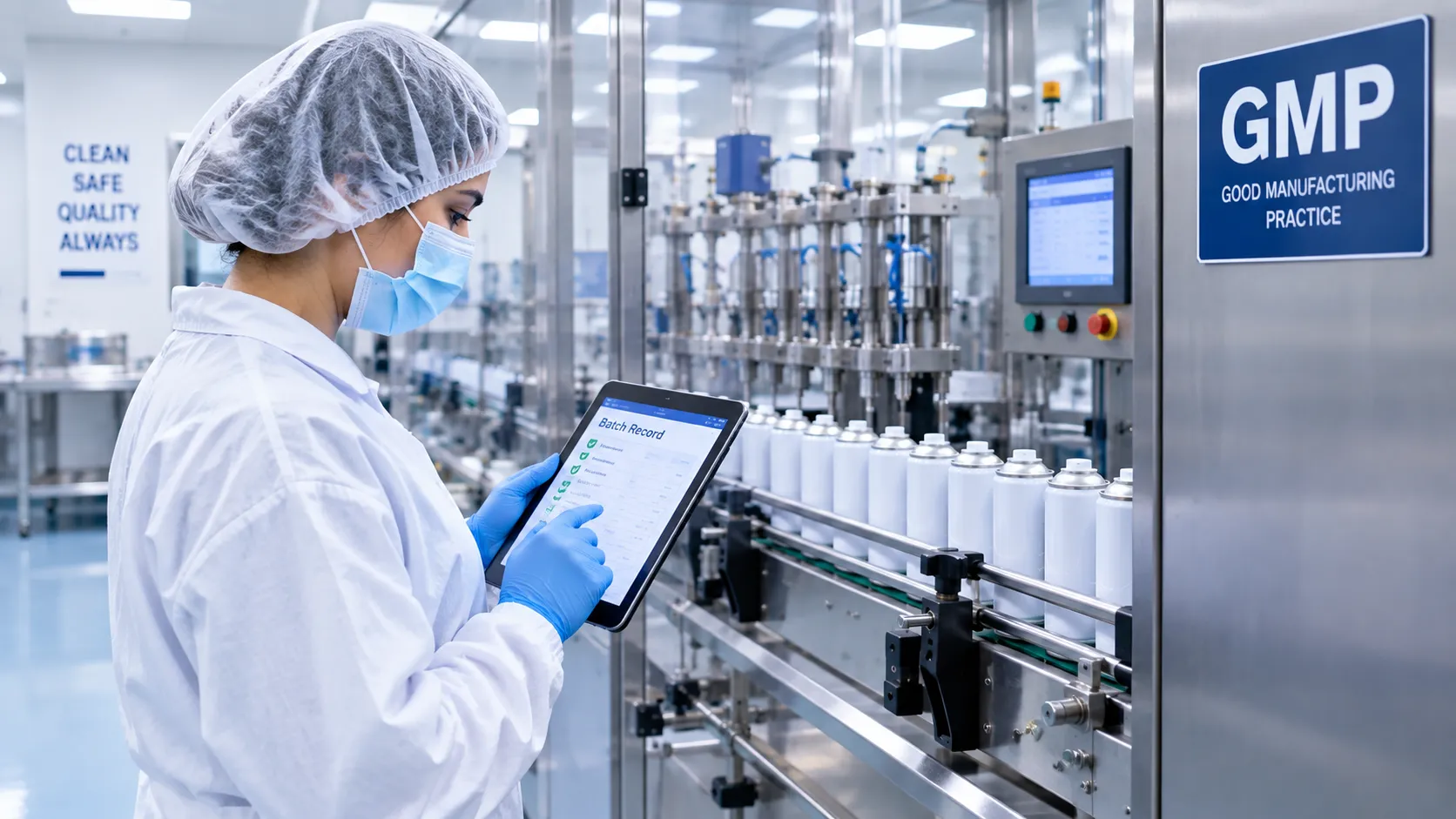
Good Manufacturing Practice (GMP) is a set of principles rather than a single standard. It focuses on making sure products are consistently produced and controlled to quality standards. In practice, GMP covers:
- Clean, controlled production areas
- Trained and qualified staff
- Documented procedures for every stage
- Raw material inspection and approval
- Batch records and traceability
- Controlled storage and handling
GMP expectations differ by product category. Cosmetic, personal care, household, and technical aerosols can each fall under different requirements, so ask which GMP framework the factory follows for your product type.
Ready to discuss your aerosol project?
Not sure which quality standards your product needs? Our team can walk you through the process and answer your questions. Book a free consultation with our experts →
Other Documentation Worth Asking About
Certifications are only part of the picture. A reliable UAE aerosol manufacturer should also be able to discuss:
- Regulatory compliance: how products are prepared for UAE and GCC market requirements, including labeling and registration where relevant
- Safety documentation: safety data sheets and handling procedures for propellants and formulations
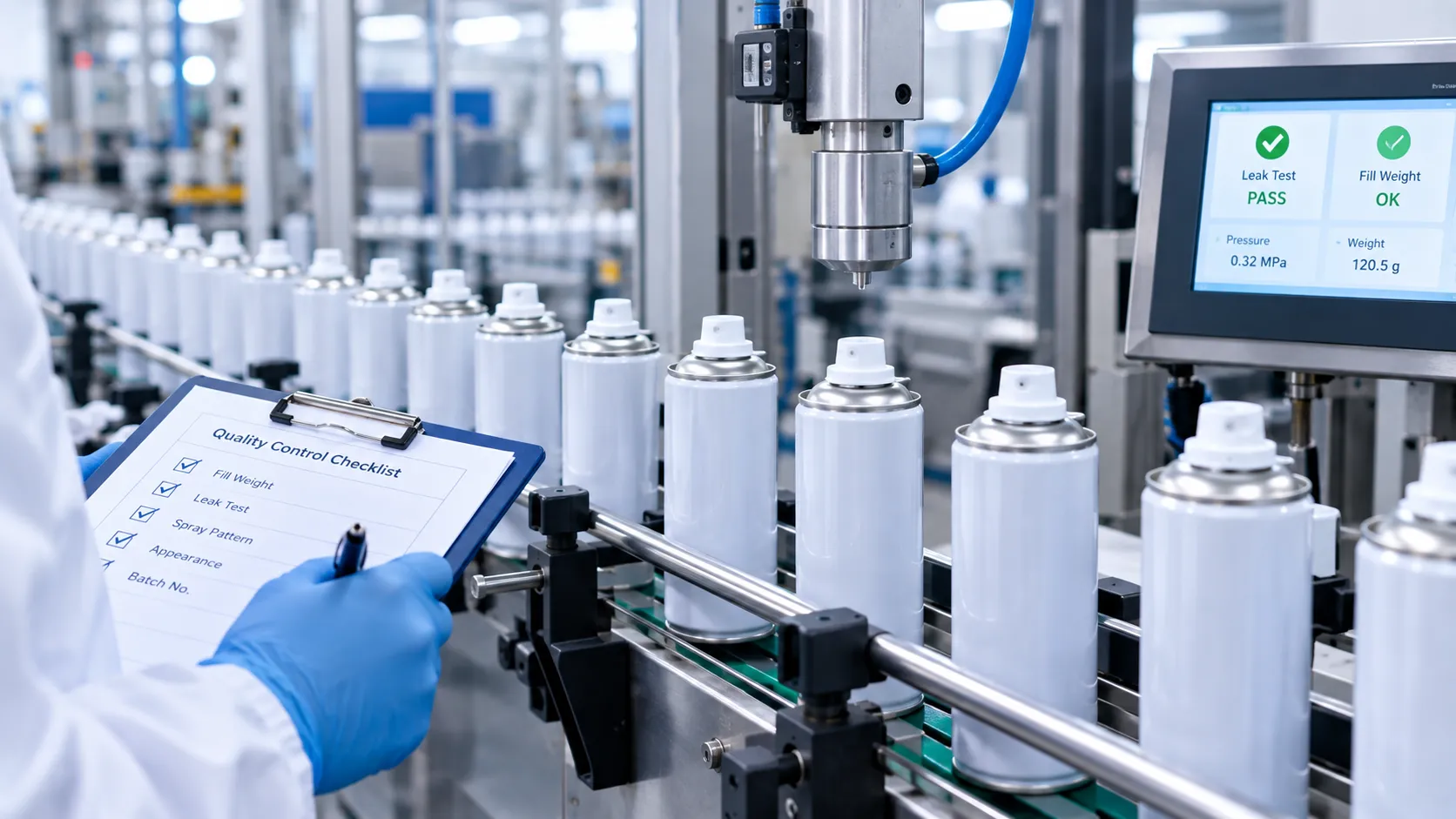
- Quality control practices: in-process checks such as leak testing and fill-weight verification
- Batch traceability: the ability to trace materials and production records for each batch
- Free Zone or licensing status: the legal basis on which the factory operates
How to Verify a Factory’s Certifications
Never rely on a logo on a website. Before committing to a manufacturing partner:
- Request copies of current certificates.
- Check the scope. A certificate should cover the actual activity (for example, aerosol filling and manufacturing), not an unrelated one.
- Check the validity dates. Certificates expire and must be renewed through audits.
- Confirm the issuing body. It should be a recognized certification body, and many allow online verification.
- Ask for a factory visit or virtual tour to see how documented procedures work on the production floor.
Red Flags to Watch For
- Certificates that cannot be shown on request
- Expired or unclear validity dates
- Certificates that do not match the factory’s actual activities
- Vague answers about quality control and batch records
- Reluctance to allow audits or visits

Choosing the Right Aerosol Manufacturing Partner in the UAE
Certifications are a strong signal, but they work best alongside experience, transparent communication, and production capability that fits your volumes. If you are comparing options, start with our overview of an aerosol factory in the UAE to see how a full-service manufacturing partner operates.
Launching your own brand? Our private label aerosol manufacturer service covers formulation, filling, and packaging under your name, with the quality documentation your distributors and retailers expect.
Frequently Asked Questions
Which certifications matter most for an aerosol factory in the UAE?
ISO 9001 for quality management is the baseline. Depending on your product, ISO 22716 (cosmetics GMP), ISO 14001 (environmental), and ISO 45001 (health and safety) add further assurance.
What is the difference between ISO and GMP?
ISO standards audit how a company manages its systems and processes, and a certificate is issued after an assessment. GMP is a set of manufacturing principles focused on consistent product quality and safety, applied in different ways by industry.
Do cosmetic aerosols need different certifications than household aerosols?
Often, yes. Cosmetic products typically follow cosmetics GMP guidelines such as ISO 22716, while household and technical aerosols may follow other requirements. Confirm what applies to your product category.
How can I verify that an aerosol manufacturer’s certificate is genuine?
Ask for a copy, check the scope, the validity dates, and the issuing body, and verify it with the certification body where online checks are available.
Does a certified factory guarantee my product will meet market regulations?
No. Certifications show a factory runs controlled systems, but product-specific regulatory requirements, such as labeling and registration, are a separate step you should plan for.
Can I visit the factory before choosing a manufacturer?
Reputable manufacturers generally welcome visits or virtual tours. Seeing the production floor is one of the best ways to confirm that documented standards are followed.
Are certifications enough to choose a manufacturing partner?
They are an important filter, not the only one. Also consider experience, communication, minimum order quantities, and the ability to support your product from development to filling.