
Companies that manufacture, package, store, or export aerosol products in the United Arab Emirates must comply with a range of regulatory requirements. Aerosol Packaging & Export Regulations in the UAE cover areas such as product safety, quantity declaration, labeling, storage, transportation, and export procedures. The exact obligations depend on the product’s composition, intended use, hazard classification, and transport method.
This guide explains the main Aerosol Packaging & Export Regulations in the UAE that businesses should consider. It focuses on official UAE legislation and regulatory frameworks while highlighting areas where product-specific requirements may apply. Companies should verify the current requirements for their individual products before placing them on the market or preparing them for export.
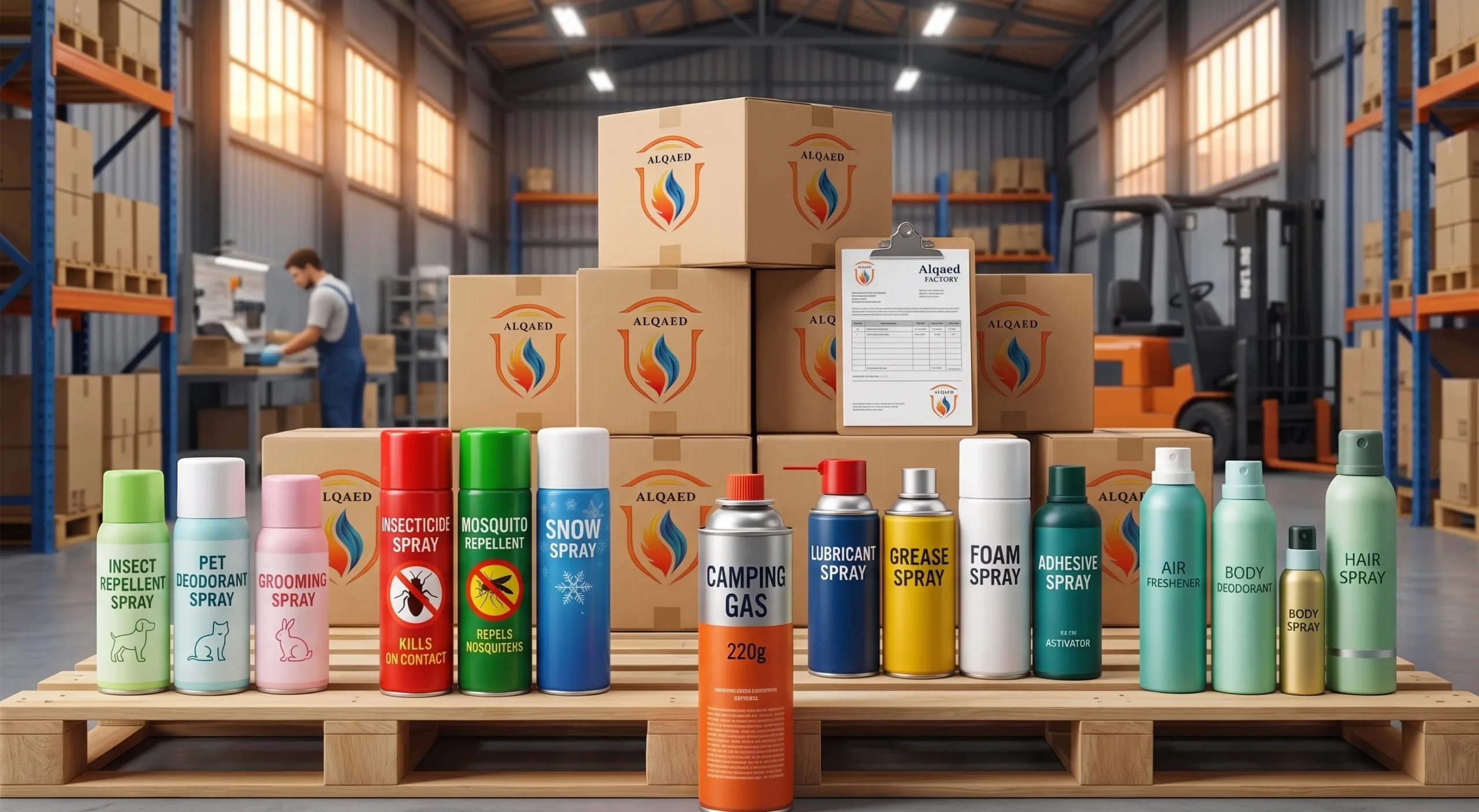
Understanding Aerosol Packaging Regulations in the UAE
Aerosol products can fall under several regulatory frameworks. One important area concerns the quantity of product contained in pre-packaged goods.
Cabinet Resolution No. (83) of 2024 establishes technical regulations for controlling the quantity of products in pre-packages. The resolution addresses aerosol packaging and provides rules for the metrological control of quantities in pre-packaged products.
For products filled in pressurised cans and dispensed as a spray, the applicable quantity requirements must be assessed according to the rules established for aerosol products. The framework applies to relevant pre-packages manufactured, imported, or filled locally for direct sale in the UAE.
The regulatory framework is therefore not based on one universal requirement for every aerosol. The applicable rules can vary according to the product category and the technical regulation or standard governing it.
UAE Requirements for Aerosol Product Packaging
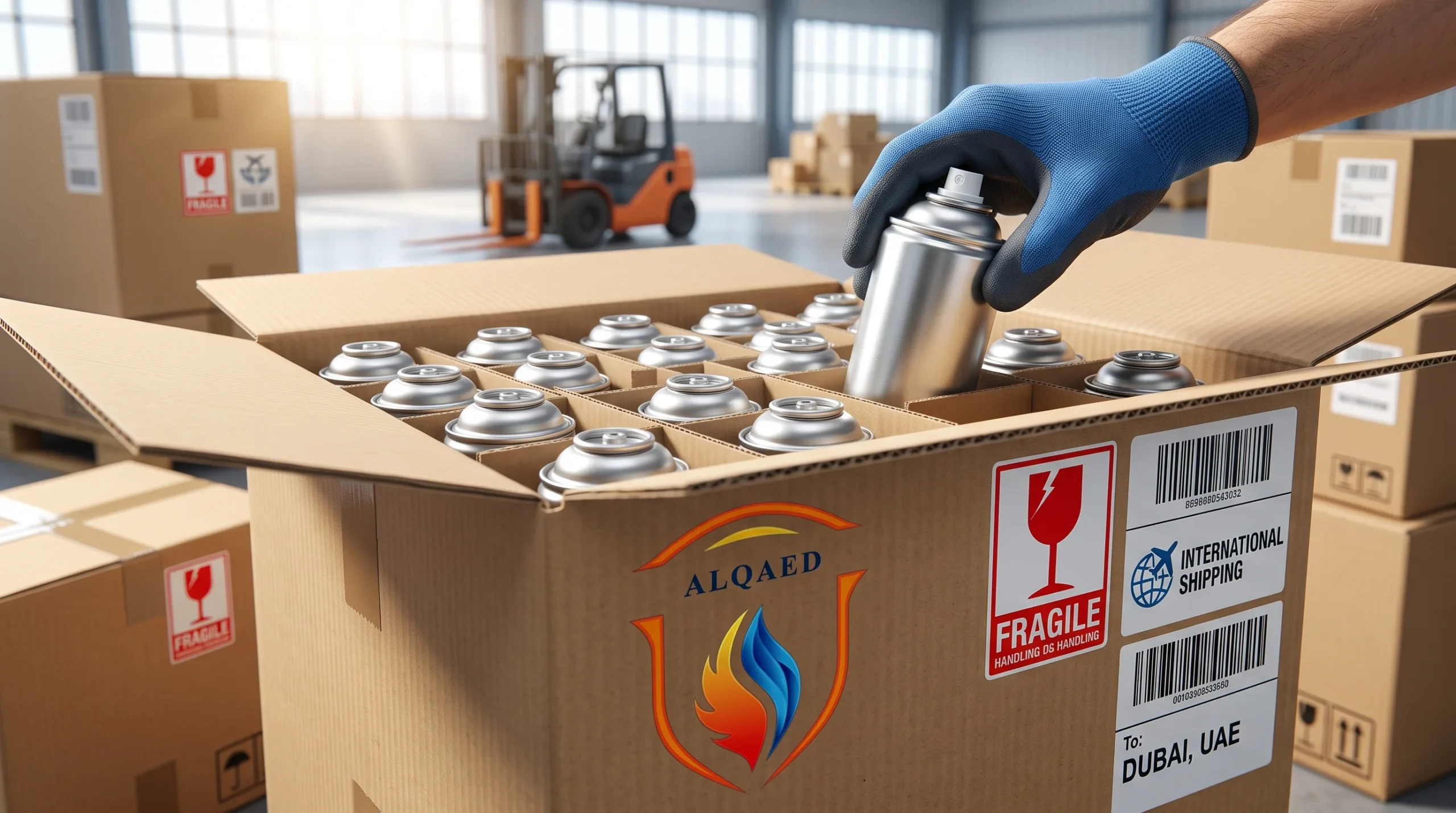
Packaging requirements generally relate to quantity declaration, product integrity, and compliance with applicable product-specific requirements.
Cabinet Resolution No. (83) of 2024 establishes requirements for the control of quantities in pre-packaged products. It also sets requirements concerning the information displayed on labels and the units used for quantity declarations.
For aerosol products, businesses should ensure that the declared quantity complies with the applicable metrological requirements and that the packaging supports accurate product information.
There is no single federal packaging specification that automatically applies to every aerosol container. Requirements relating to container materials, pressure performance, compatibility with contents, or other technical characteristics may depend on the applicable product standard or dangerous-goods requirements.
For companies reviewing Aerosol Packaging & Export Regulations in the UAE, this distinction is particularly important because the same packaging approach may not apply to different aerosol categories.
Businesses involved in Contract Manufacturing should confirm the applicable regulatory requirements before production begins. The same consideration applies to companies using Private Label manufacturing, particularly when a product has a specific formulation, intended use, or target market.
At Alqaed, Private Label customers benefit from a manufacturing process designed to meet applicable UAE safety, packaging, and export requirements, helping ensure that products are prepared for compliant distribution in their target markets.
Aerosol Labeling and Product Information Requirements
Labeling is another important element of aerosol compliance. The exact information required depends on the applicable technical regulation, product category, and metrological requirements.
Cabinet Resolution No. (83) of 2024 establishes requirements for information displayed on pre-package labels. These requirements include the nominal quantity and information that allows the product to be traced back to the relevant manufacturer, packer, or importer.
The resolution also establishes requirements concerning the presentation and legibility of quantity information. Businesses should therefore review the applicable labeling requirements before finalising packaging artwork.
Federal Law No. (10) of 2018 considers the product label, presentation, and instructions for use or disposal as relevant elements in assessing product safety.
Language requirements can also vary according to the product category and governing regulation. Companies should verify the current requirements for mandatory identification, safety information, warnings, and other required particulars before production.
Storage and Transportation Requirements for Aerosol Products
Storage and transportation requirements depend heavily on the product’s hazard classification and the selected transport method.
Some aerosol products are classified as dangerous goods for transportation because they contain pressurised contents or propellants. However, the exact classification must be established according to the characteristics of the individual product. Businesses should not assume that every aerosol has the same transport classification.
For air transportation, the General Civil Aviation Authority (GCAA) regulates dangerous goods through CAR Part VI – Transport of Dangerous Goods by Air. The applicable framework incorporates the relevant international aviation requirements and UAE-specific provisions.
Companies shipping aerosols by air must therefore determine the appropriate classification, packaging, marking, labeling, and documentation requirements before shipment.
International transportation introduces additional requirements. Depending on the transport mode, applicable international frameworks may include the ICAO Technical Instructions, IATA Dangerous Goods Regulations, IMDG Code, or ADR.
The correct requirements should always be determined according to the product’s classification and the specific transport operation.
Aerosol Export Regulations in the UAE
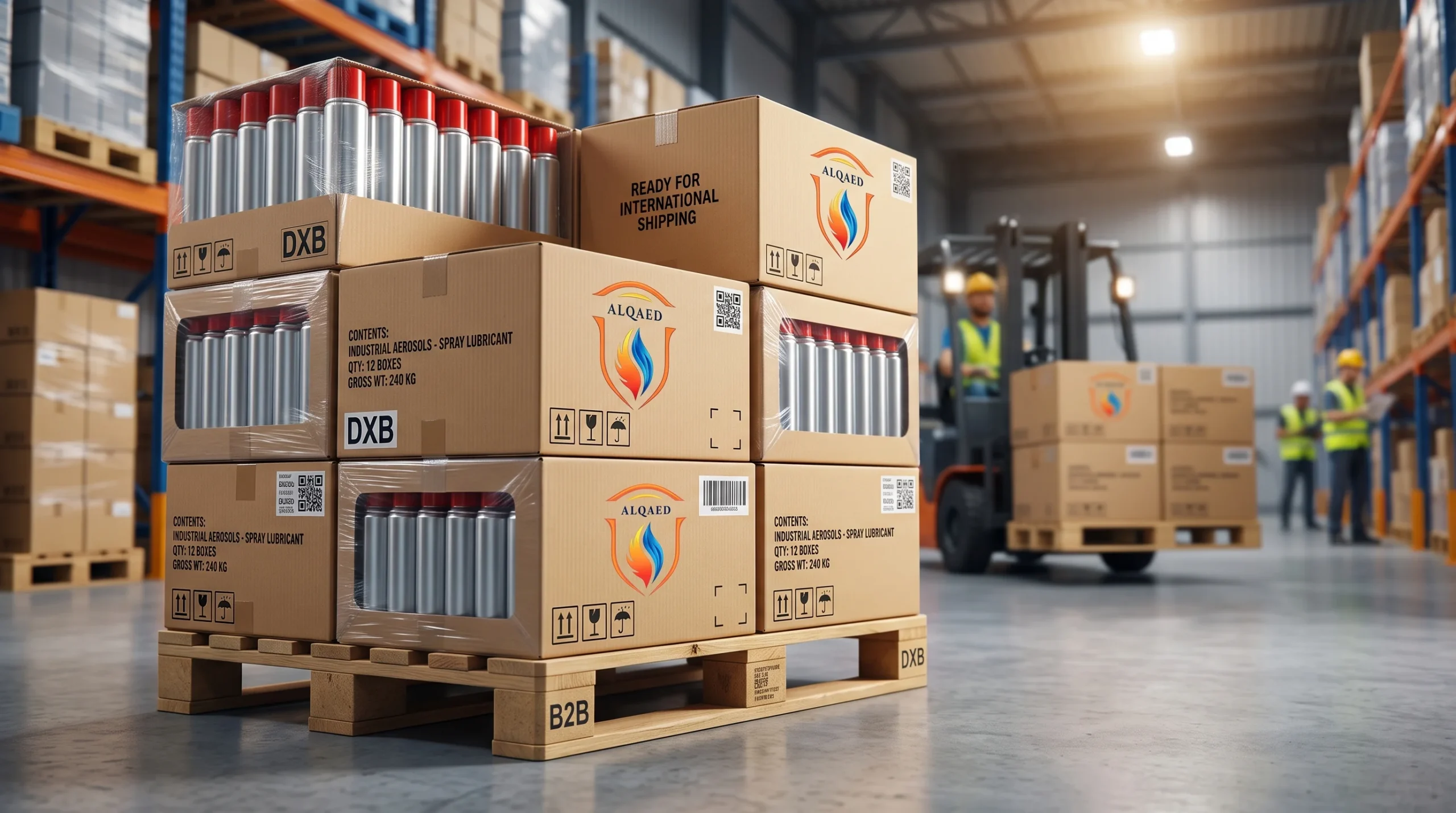
Export requirements involve both UAE procedures and the regulations of the destination country. This distinction is essential for businesses operating across international markets.
The UAE framework may govern product compliance, customs procedures, and the transportation of dangerous goods from the country. The destination country may impose separate requirements covering product registration, labeling, packaging, chemical controls, and import approvals.
For this reason, Aerosol Packaging & Export Regulations in the UAE should be assessed alongside the regulatory requirements of the destination market. Compliance with UAE requirements does not automatically mean that an aerosol product can enter another country without additional approvals.
For air exports, dangerous-goods requirements can be particularly important. Businesses must establish the correct classification and ensure that the shipment meets the applicable packaging, marking, labeling, and documentation requirements.
Certain regulated product categories may require additional registration, approval, or documentation before export. Companies should verify these requirements with the competent authority before preparing a commercial shipment.
Destination-country requirements must also be checked independently. An aerosol that complies with UAE regulations may still require additional documentation, labeling, registration, or approval before it can legally enter another market.
Which UAE Authorities Regulate Aerosol Products?
Several UAE authorities may have responsibilities depending on the product and the activity involved.
Ministry of Industry and Advanced Technology (MOIAT) is relevant to UAE technical regulations, standards, conformity requirements, and metrological controls.
General Civil Aviation Authority (GCAA) regulates the transportation of dangerous goods by air under the applicable civil aviation framework.
Federal and local Customs authorities administer customs procedures and controls relating to goods entering or leaving the UAE.
Local authorities, including relevant municipal and Civil Defence bodies, may also have responsibilities concerning premises, storage, fire safety, or specific product categories.
What Businesses Should Verify Before Exporting Aerosol Products
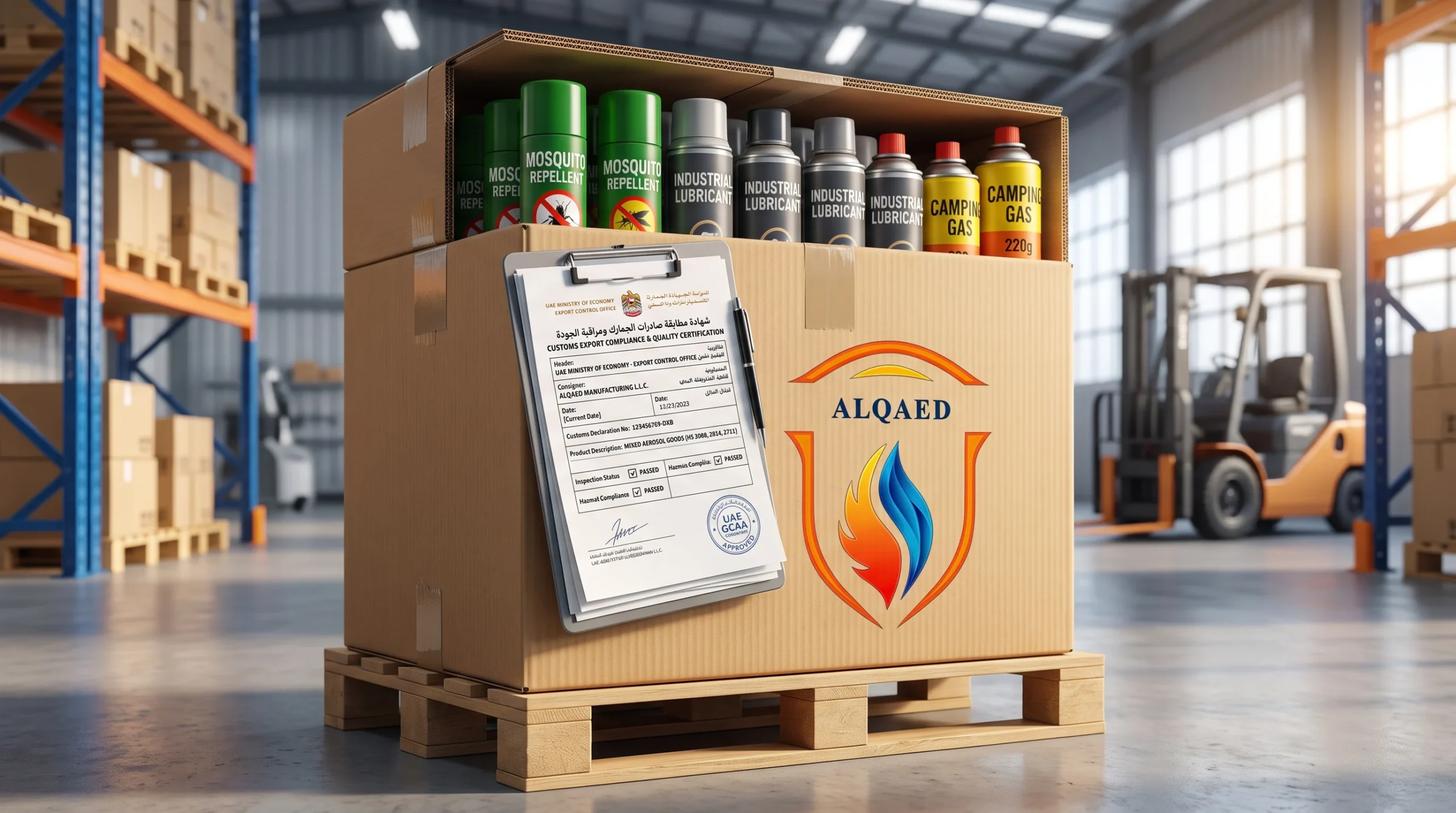
Before manufacturing, packaging, storing, or exporting an aerosol product, companies should verify the applicable requirements against current official sources.
For businesses assessing Aerosol Packaging & Export Regulations in the UAE, the following points should be confirmed:
- The UAE technical regulation or standard applicable to the specific product.
- Quantity declaration and metrological requirements.
- Product labeling and required information.
- Applicable language requirements.
- Dangerous-goods classification for the selected transport method.
- Packaging, marking, labeling, and documentation requirements for transportation.
- Registration, conformity assessment, or approval requirements, where applicable.
- Customs procedures for the planned export.
- Additional regulatory requirements imposed by the destination country.
This review should take place before packaging artwork is finalised and before a shipment is prepared. Early verification can help businesses identify regulatory issues before they result in production changes or shipment delays.
Companies providing Aerosol Manufacturing, Contract Manufacturing, or Private Label services should also incorporate regulatory verification into their product-development and production processes.
FAQ
Are aerosol products regulated as dangerous goods in the UAE?
Some aerosol products are classified as dangerous goods for transportation. The exact classification depends on the product’s contents, propellant, and hazard characteristics. For air transportation, businesses must comply with the applicable GCAA dangerous-goods requirements.
What information should appear on an aerosol label?
The required information depends on the product and its governing technical requirements. UAE metrological rules include requirements concerning nominal quantity and traceability information on pre-package labels. Additional information may be required under product-specific regulations or standards.
Do UAE export rules guarantee access to the destination market?
No. Compliance with UAE requirements does not automatically guarantee acceptance in another country. Exporters should separately verify the destination market’s packaging, labeling, chemical, product-registration, and import requirements.
What should businesses check before exporting aerosol products?
Businesses should confirm the applicable UAE technical requirements, product classification, packaging and labeling rules, transport requirements, customs procedures, and destination-country regulations before production or shipment.
For the latest requirements, businesses should consult the current legislation, technical regulations, standards, and competent UAE authorities applicable to their specific product.