
Choosing the right aerosol can is one of the first decisions a distributor makes when building a product range. Size affects shelf appeal, shipping cost, filling economics and how well a product suits its market. Get it right and your range feels natural to buyers; get it wrong and you may face slow-moving stock, awkward logistics and expensive packaging changes later.
This guide covers the can sizes, materials, closures and packaging formats most commonly used across the GCC, so you can plan your range and brief your manufacturer with confidence.

Why Can Size Matters for GCC Distributors
In the Gulf region, aerosols move through very different channels: hypermarkets, pharmacies, garages, hotels, camping and outdoor retailers, and B2B facility suppliers. Each channel favours different formats.
- Retail and personal care: compact, easy-to-hold cans that fit bags, gym kits and travel cases.
- Household and automotive: mid-size cans that offer good value without being heavy or awkward to store.
- Industrial and facility use: larger cans that reduce reorder frequency and cost per use.
Climate is another factor. High temperatures across the region put extra emphasis on safe storage and transport, so pack choice should always be reviewed together with how products will be warehoused, shipped and displayed.
Understanding How Aerosol Cans Are Measured
Before comparing sizes, it helps to know the vocabulary. Aerosol cans are usually described by:
- Diameter (mm): the width of the can body, which decides which filling lines, valves and cases are compatible.
- Height (mm): which affects shelf fit, carton design and pallet stacking.
- Nominal volume (ml): the nominal capacity of the empty can.
- Fill weight or net content: what the consumer actually sees on the label, which depends on formulation and propellant.
Nominal volume and net content are not the same thing. A can needs headspace to work safely and properly, so the labelled content is always lower than the can’s total capacity. Always agree on the exact figures with your manufacturer before artwork is finalised.
Common Aerosol Can Sizes
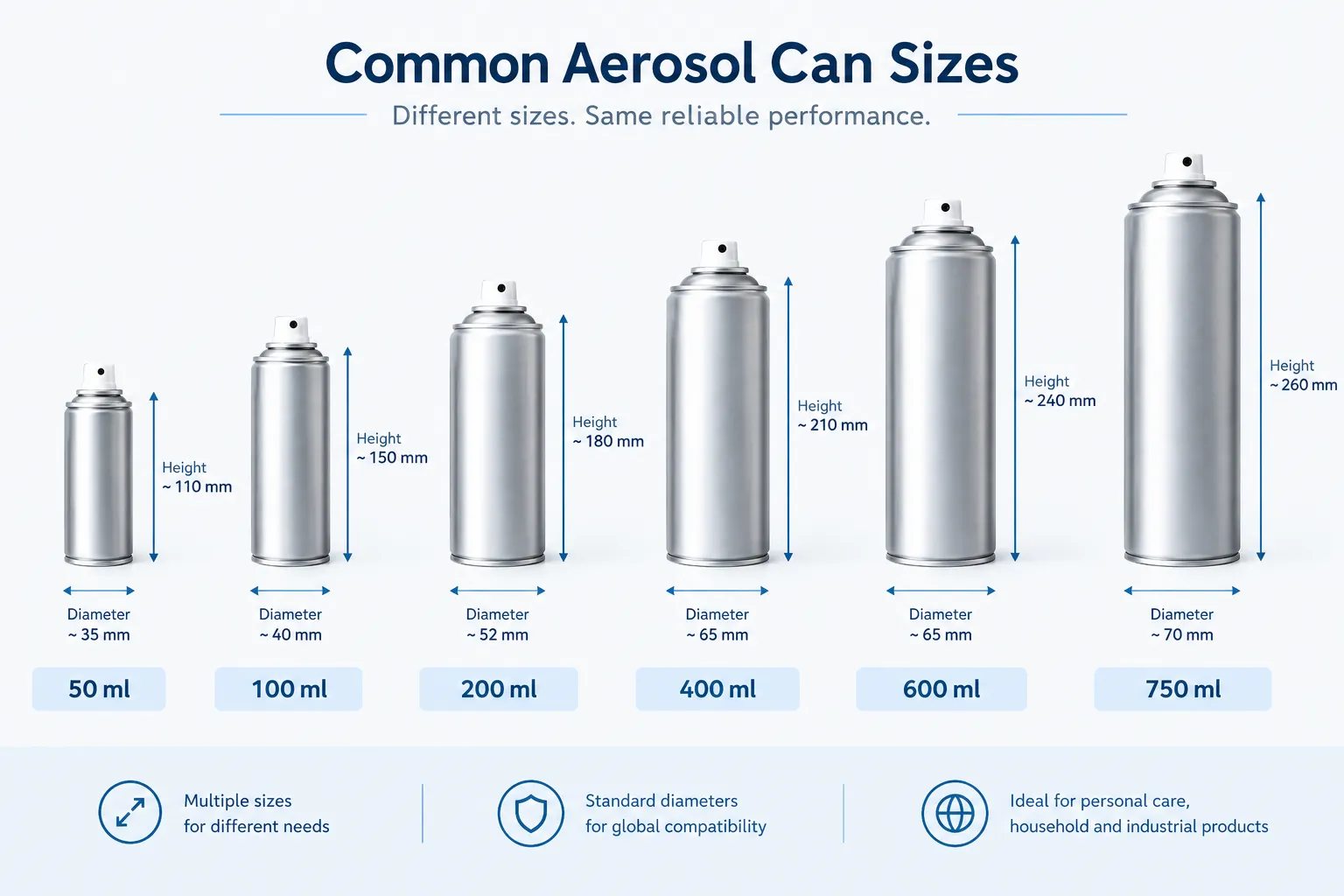
The table below shows formats commonly seen on the market. Exact dimensions vary by can supplier and material, so confirm specifications before finalising artwork or placing orders.
| Nominal Volume | Typical Diameter | Typical Applications |
| 50–100 ml | 35–45 mm | Travel-size body sprays, deodorant minis, sample formats |
| 150 ml | 45–52 mm | Body sprays, deodorants, hair care |
| 200 ml | 52 mm | Body sprays, air fresheners, household sprays |
| 250–300 ml | 52–57 mm | Air fresheners, car care, general household |
| 400 ml | 65 mm | Insecticides, lubricants, paints, cleaners |
| 500–650 ml | 65 mm | Industrial sprays, large-format household and automotive |
Sizes are indicative of common market practice, not a fixed catalogue.
Which Sizes Suit Which Industries?
Matching size to category is often more useful than looking at sizes in isolation.
Personal care and fragrance. Body sprays and deodorants sit comfortably in the smaller and mid-range formats. A compact size works for impulse purchases and travel, while a standard size suits everyday use. Many brands launch with just these two.
Home care. Air fresheners and household sprays usually use mid-size cans, where value for money and a comfortable grip matter most.
Automotive. Car care sprays, lubricants and cleaners are commonly sold in larger formats that mechanics and drivers can keep in a workshop or garage.
Industrial and facility maintenance. Buyers in this segment value volume and consistency, so larger cans are common for industrial sprays, and fewer SKUs are often enough.
Pest control. Insecticide sprays typically use larger cans to give households and businesses enough product per purchase.
Can Materials and Construction
Most aerosol cans are made from one of two metals:
- Tinplate (steel): widely used, strong and cost-effective. Common for household, automotive, paint and industrial products.
- Aluminium: lighter, naturally corrosion-resistant and well suited to premium personal care and cosmetic products, where print finish and shape matter.
Cans may be made as multi-piece (a welded or formed body with separate top and bottom) or as seamless one-piece aluminium. Your formulation, brand positioning and budget will guide the choice. As a rule of thumb, premium positioning supports aluminium and high-quality printing, while value ranges often work well with tinplate and labels. If you are building your own brand, our private label aerosol manufacturing service can help you match the can and finish to your market.
Valves, Actuators and Closures
The can is only part of the package. Distributors should also specify:
- Valve type: standard, metered-dose or specialised valves for particular formulas.
- Actuator (button): spray pattern, nozzle size and whether you need a foam, jet or fine-mist output.
- Cap: protective overcaps help prevent accidental discharge in transit and improve shelf presentation.
Matching these components to the formulation is essential, because the same product can spray very differently with a different actuator.
Planning a Product Range for the GCC?
Not sure which can size or packaging format fits your market? Our team can help you compare options and shape a range that suits your channels. Contact Alqaed today for a free consultation with our experts.

Packaging Options Beyond the Can
Once the can is chosen, there are several ways to present and ship it:
- Printed or lithographed cans: artwork applied directly to the metal for a premium, durable finish.
- Shrink sleeves: full-body sleeves that allow high-impact graphics on standard cans.
- Labels: a flexible, lower-cost route for smaller runs or frequent artwork changes.
- Multipacks and gift sets: useful for promotions and seasonal campaigns such as Ramadan and Eid.
- Cartons and shipping cases: inner cartons and master cartons sized for efficient palletising and container loading.
Each option affects cost and lead time differently. Labels offer flexibility for new brands testing the market, while printed cans and sleeves suit established products with stable artwork.
Storage and Transport Considerations
Aerosols are pressurised products, so how they are packed matters as much as what they are packed in.
- Choose cartons strong enough to protect cans during stacking and handling.
- Plan pallet configurations that avoid crushing the bottom layers.
- Keep cans away from direct sun and excessive heat during storage and delivery.
- Confirm how your freight forwarder classifies and handles pressurised goods.
Working these points out early prevents damaged shipments and delays at the port.
Regulatory and Labelling Considerations
Packaging must meet labelling and handling requirements in each target market. This typically includes clear warning statements, usage instructions, contents information and batch or date coding. Requirements can differ between GCC countries, and Arabic labelling is often expected, so confirm current rules for each market before printing. A manufacturer experienced in regional exports can guide you on what your pack needs to carry.
How to Choose the Right Format
Use these questions as a quick checklist:
- Who is the end user? Consumers favour handy sizes; trade buyers favour value and volume.
- What is the product? Fine-mist fragrances and heavy-duty lubricants have very different packaging needs.
- What is the price point? Premium positioning supports aluminium and printed cans; value ranges often suit tinplate with labels.
- How will it ship? Consider case sizes, pallet efficiency and storage in hot conditions.
- How many SKUs can you manage? Starting with fewer sizes keeps inventory and minimum order quantities manageable.
Common Mistakes to Avoid
- Launching too many sizes at once. More SKUs mean more stock, more artwork and more complexity.
- Finalising artwork before confirming can specifications. Small dimension changes can force a redesign.
- Ignoring the actuator. A poor spray pattern can undermine an otherwise strong product.
- Overlooking local labelling rules. Late changes to labels are costly.
- Treating packaging as separate from formulation. The two should be planned together.

Work with a Manufacturer from the Start
Can size, valve, actuator and artwork all influence each other, and changing one late in development can be costly. Involve your manufacturer early so formulation, filling and packaging are planned together. If you are developing a personal care line, explore our body spray manufacturing services to see how we support brands from concept to finished product. For brands planning their own label, our private label aerosol manufacturer page explains how the process works from start to finish.
Frequently Asked Questions
What are the most common aerosol can sizes in the GCC market?
Mid-range formats between about 150 ml and 400 ml are the most widely used across personal care, household and automotive categories. Larger cans are typical for industrial use and compact cans for travel and sample products.
Should I choose aluminium or tinplate cans?
It depends on your product and positioning. Tinplate is a popular, cost-effective choice for household, automotive and industrial products, while aluminium is often preferred for premium personal care thanks to its lighter weight and print quality.
Can I launch with more than one can size?
Yes. Many distributors start with one or two sizes and add more once demand is clear. This keeps inventory and minimum order quantities easier to manage.
Does the actuator really affect how the product performs?
Yes. The actuator and valve control spray pattern, flow rate and output type, so they should be selected together with the formulation, not as an afterthought.
Do I need Arabic labelling on aerosol packaging for GCC markets?
Arabic text is commonly expected on consumer products in the region, along with required warnings and usage instructions. Requirements vary by country, so check current rules for each market before printing.
How early should I involve my manufacturer in packaging decisions?
As early as possible. Choosing can size, valve and artwork together with the formulation avoids redesign and delays later in the project.