
If you source camping gas canisters for retail, distribution or export, you will quickly meet one question: should the canister be filled with butane, propane, or a blend? The honest answer to “which is safer?” is that neither gas is safe or unsafe on its own. Safety comes from how the canister is designed, filled and tested. What the two gases do change is pressure, cold-weather behaviour and the engineering the canister needs.
This guide compares them from a manufacturing and performance point of view.
What Are Butane and Propane?
Both are liquefied petroleum gases (LPG). They are stored as a liquid under moderate pressure and turn into gas when the valve opens. Both are widely used in portable stoves, and both are normally odorised so leaks are easier to detect.
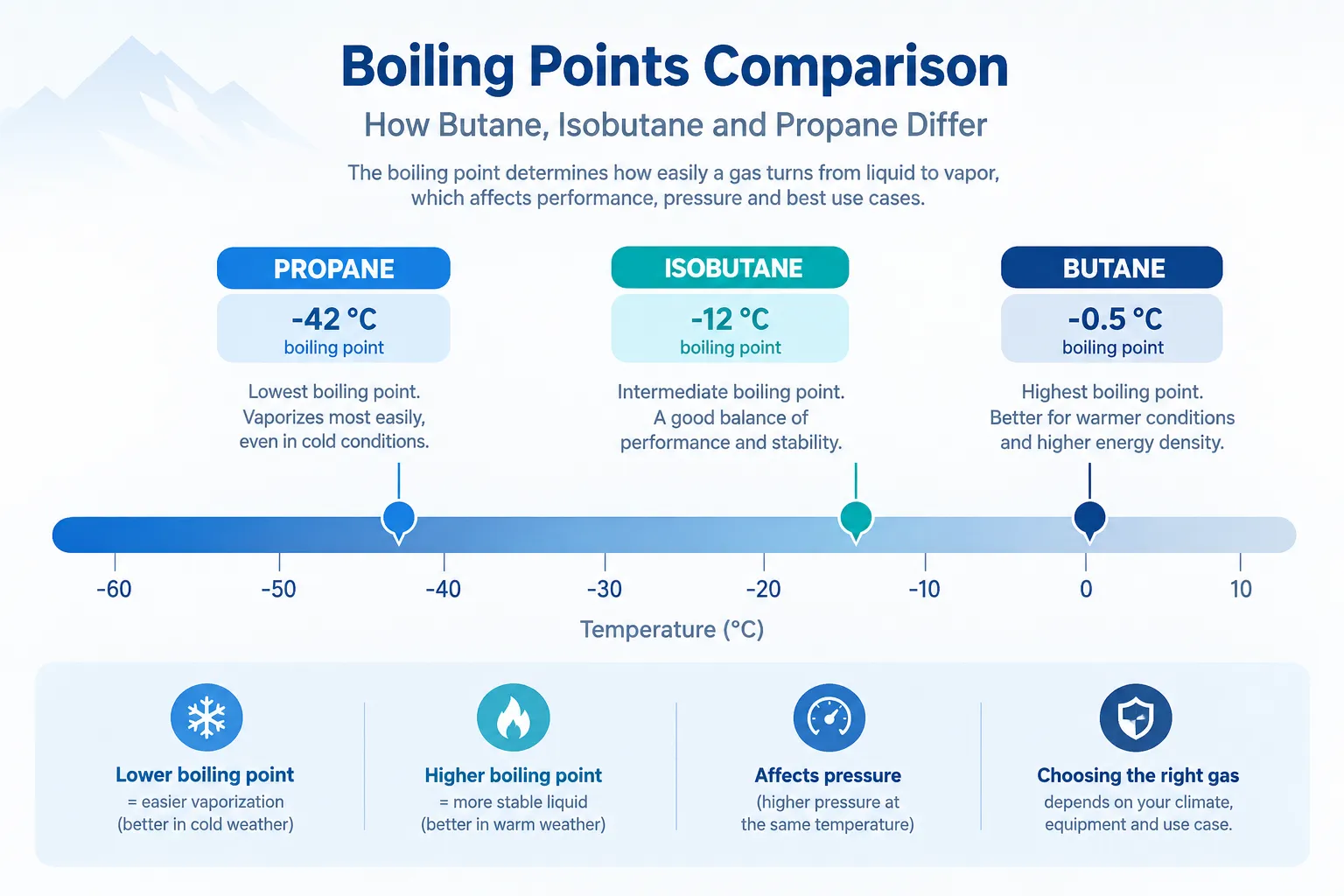
The key difference is the boiling point:
- Butane boils at roughly -0.5 °C
- Isobutane (a butane isomer used in many canisters) boils at roughly -11.7 °C
- Propane boils at roughly -42 °C
That one property drives most of the differences below.
Butane vs Isobutane vs Propane: Quick Comparison
| Property | Butane (n-butane) | Isobutane | Propane |
| Approx. boiling point | -0.5 °C | -11.7 °C | -42 °C |
| Approx. vapour pressure at 20 °C (absolute) | ~2.1 bar | ~3.0 bar | ~8.4 bar |
| Cold-weather performance | Weak near 0 °C | Moderate | Strong, works well below freezing |
| Container pressure demand | Lowest | Low to moderate | Highest, needs a more robust canister and valve |
| Typical applications | Portable camping stoves, mild-climate canisters, lighters | Cold-tolerant camping canisters, usually blended with butane | Cold-climate canisters, blends for higher output, heaters and cylinders |
| Common role in canisters | Base gas in butane canisters | Main component of many all-season blends | Added to blends to lift pressure in the cold |
Values are approximate and vary with temperature and exact composition. Always confirm against the technical data sheet of the specific product.
Performance Differences
1. Cold-weather performance
A canister only delivers gas while the liquid inside can vaporise. Near the boiling point, vaporisation slows, pressure drops and the flame weakens. Pure butane struggles at low temperatures. Isobutane does better. Propane keeps working well below freezing.
For this reason, many canisters sold for three-season or cold-weather use are blends of butane, isobutane and propane. The blend ratio is tuned to the climate of the target market.
2. Internal pressure
At the same temperature, propane exerts much higher vapour pressure than butane. At about 20 °C, propane’s vapour pressure is several times that of butane.
This is the main safety-relevant difference for a manufacturer. A higher-pressure fill needs a canister, valve and seal rated for it, tighter filling control and a stricter test regime. A canister designed for butane must not be filled with a propane-rich blend.
3. Energy content
By weight, the two gases have very similar energy content. The practical differences come from pressure, vapour behaviour and burner design, not from energy per kilogram.
4. Burner compatibility
Stoves and appliances are designed around a specific pressure range and valve type. A canister must be matched to the appliance family it is sold for. Changing the blend changes flame output and regulator behaviour.
What Actually Makes a Canister Safe?
When buyers compare “butane vs propane safety”, the gas is only one factor. These matter at least as much:
- Pressure-rated container design: wall thickness, material and dome strength matched to the fill
- Accurate filling: controlled fill weight and headspace, so the liquid has room to expand with heat
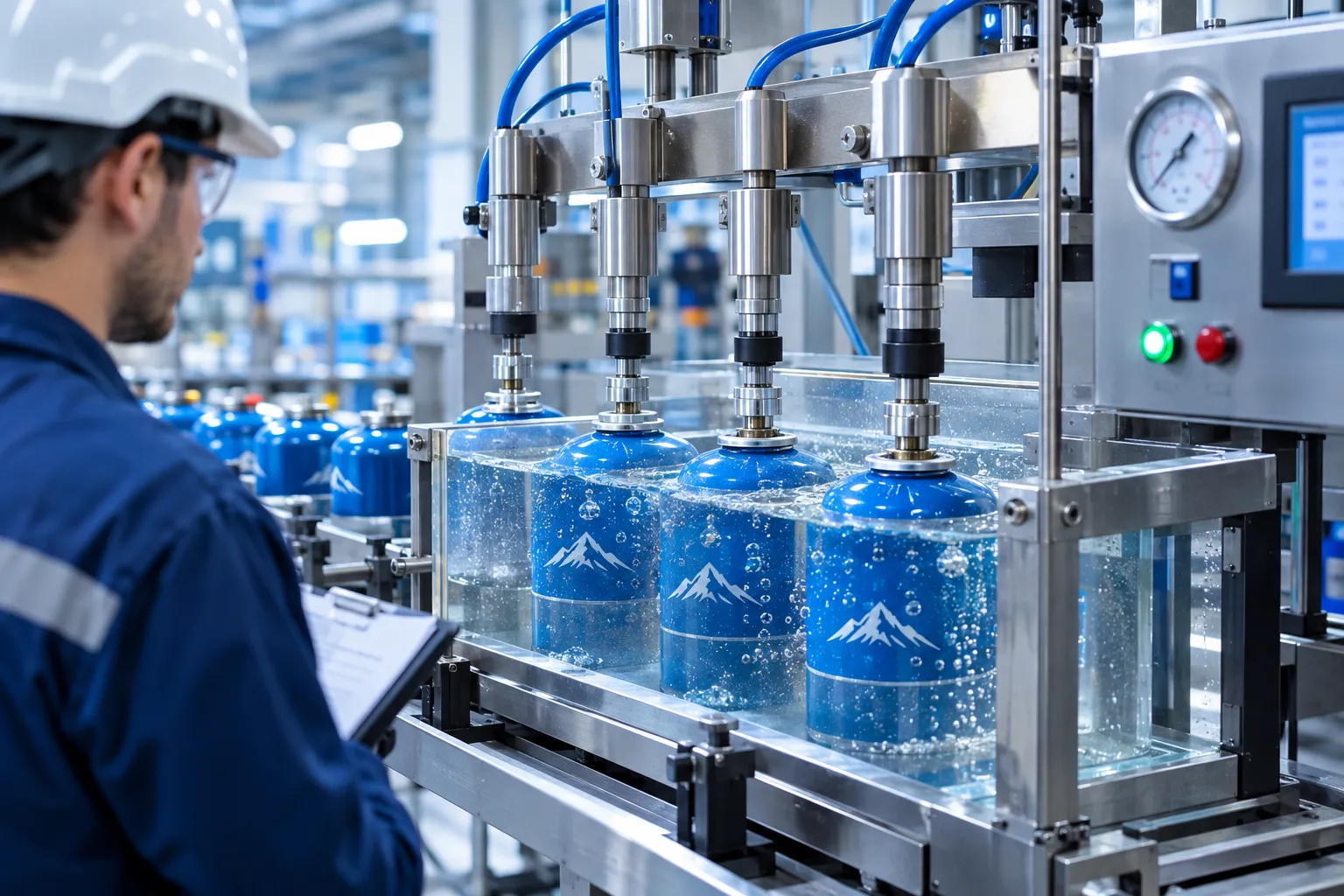
- Leak testing: every unit checked after filling, commonly with a hot-water bath or equivalent
- Valve and seal quality: a consistent connection with the intended stove type
- Blend consistency: a repeatable, documented gas composition from batch to batch
- Clear labelling: hazard markings, storage and handling warnings in the languages of the target market
Export Suitability
Different markets set different rules for LPG canisters. Many require compliance with recognised standards for non-refillable cartridges (for example, EN 417 in Europe), plus transport rules for dangerous goods. Requirements for labelling, valve type, filling limits and documentation vary by destination.
Choose the gas blend and canister specification after you know the destination market, not before. Hot-climate markets and cold-climate markets often call for different blends.
Planning a camping gas product for your market?
Our team can help you choose the right canister format, blend approach and compliance path for your target countries.
Talk to Alqaed’s experts for a free consultation: Contact us | WhatsApp: +971 50 161 2194 | sale.manager@alqaedfactory.com
Which One Should a Brand Choose?
Instead of asking which gas is safer, ask these questions:
- Where will the product be sold and used? Climate sets the blend.
- Which stoves must it fit? Valve and pressure range set the canister design.
- Which regulations apply at the destination? Standards set the testing and labelling.
- Is the filling partner able to control and document each batch? Quality control sets the real safety level.
A well-made butane-based canister and a well-made propane-containing blend can both be safe within their intended use. A poorly made canister is a risk with either gas.
Working With a Specialist Manufacturer
Alqaed is a UAE-based aerosol and gas manufacturer with experience in controlled filling, leak testing and private label production. If you are developing or sourcing camping gas canisters, see our camping gas manufacturing services or contact us with your target market and specifications.
Frequently Asked Questions
Is butane or propane safer for camping gas canisters?
Neither is inherently safer. Both are flammable and must be handled correctly. Safety depends on the canister’s pressure rating, filling accuracy, leak testing and use within its intended design. The main practical difference is that propane has a much higher vapour pressure, so it needs a more robust container.
Why do many camping canisters contain a butane-propane blend?
Blending lets manufacturers balance cold-weather performance (from propane) against lower pressure and easier handling (from butane and isobutane). The ratio is chosen for the climate and the appliances of the target market.
Which gas performs better in cold weather?
Propane. Its boiling point is far below freezing, so it keeps vaporising in cold conditions. Pure butane loses pressure near 0 °C, and isobutane performs somewhat better than normal butane.
Can a butane canister be filled with propane instead?
No. Propane’s higher pressure can exceed what a butane-rated canister and valve were designed for. The canister, valve and fill specification must be designed together.
Do butane and propane canisters need different testing?
The principles are the same: fill-weight checks and leak testing on every unit. However, higher-pressure blends need containers and test parameters suited to that pressure. Required standards also depend on the destination market.
What should I check before exporting camping gas canisters?
Check the destination’s standards for non-refillable gas cartridges, dangerous-goods transport rules, labelling language and valve compatibility. A manufacturer experienced in export can help you document this.
Does Alqaed manufacture camping gas canisters for private label brands?
Yes. Contact our team to discuss your market, canister format and branding. Details are on our camping gas manufacturer page.