
If you are planning to launch your own aerosol brand, whether a body spray, air freshener, car-care product or household cleaner, one of the first questions you will ask is: what will it cost?
The honest answer is that there is no single number. The cost of private label aerosol manufacturing depends on a set of variables that change from one project to another. Understanding these factors helps you budget realistically, compare factory quotes fairly, and avoid surprises later.
This guide explains what drives the cost of a private label aerosol product, so you can make informed decisions before you request a quote.
Why There Is No Fixed Price for Private Label Aerosols
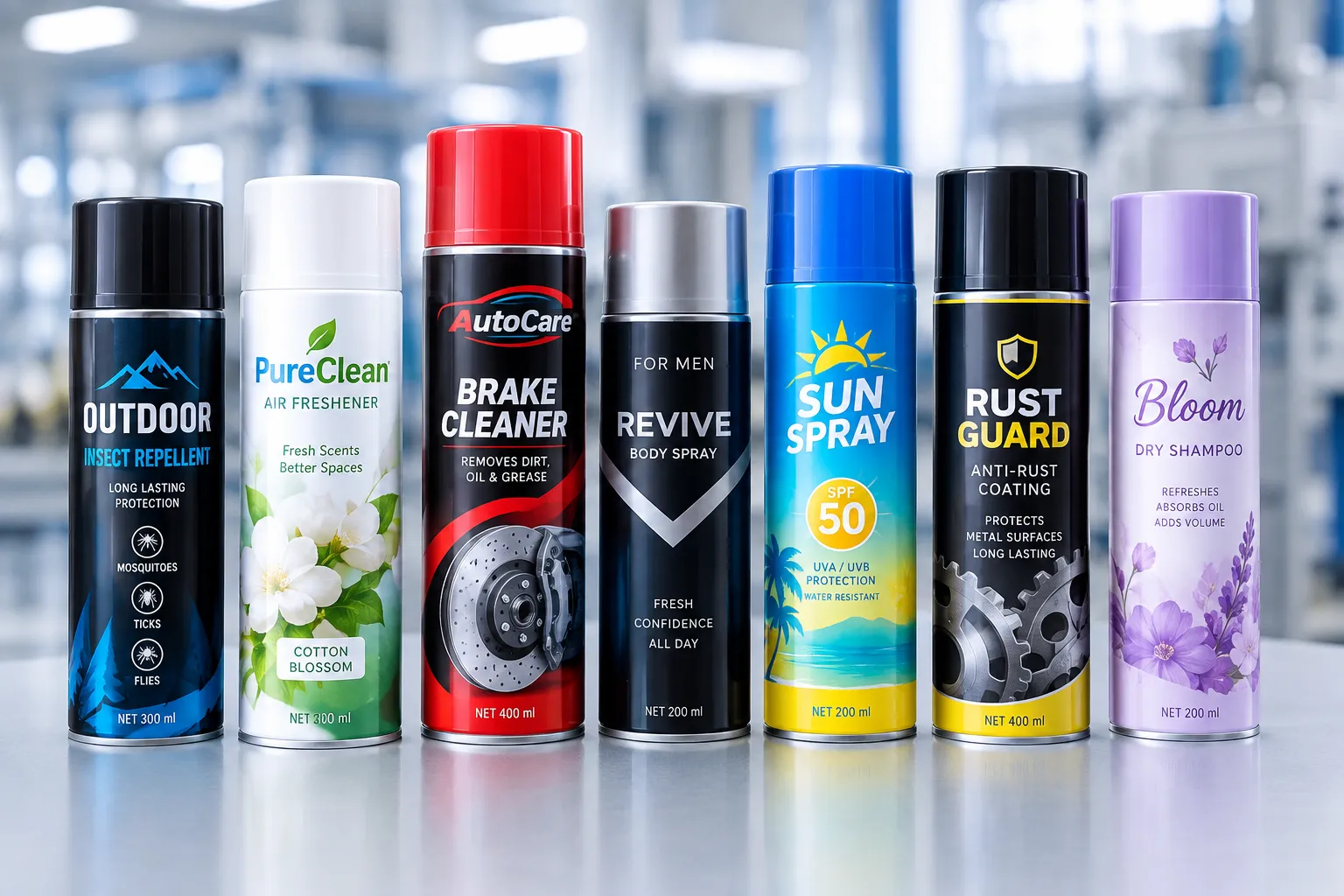
Two aerosol products can look similar on a shelf yet cost very different amounts to produce. A fragrance body spray with a custom scent and a premium valve is a very different project from a simple solvent-based cleaner in a standard can.
For that reason, reputable manufacturers quote per project rather than publishing a flat price list. Your final cost is the sum of several components, each of which you can influence through the choices you make.

The Main Factors That Affect Private Label Aerosol Cost
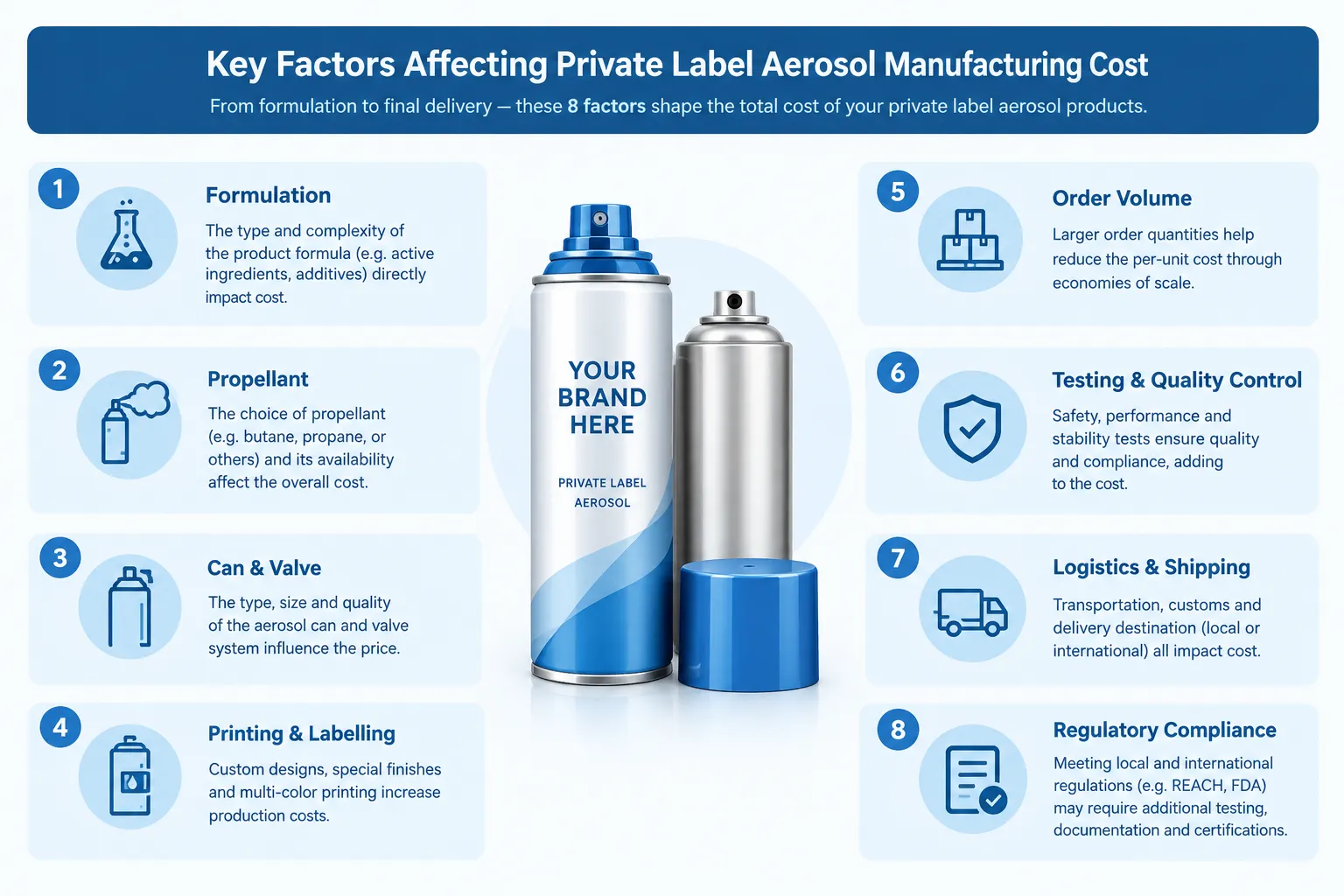
1. Formulation and Raw Materials
The formulation is the heart of your product, and it is often the biggest cost driver.
- Active ingredients and fragrance: Premium fragrance oils, specialty actives or skin-care ingredients cost more than basic ones.
- Solvents and carriers: The type and quality of solvent affect both performance and price.
- Custom vs. ready formulas: Developing a unique formula requires lab time, testing and stability checks. Choosing an existing, proven base formula can shorten development and reduce upfront costs.
- Regulatory suitability: Cosmetic, household and automotive aerosols each have different requirements, which can influence ingredient choices.
2. Propellant Type and Quantity
Aerosols need a propellant to dispense the product. Hydrocarbon propellants (such as blends of butane and propane), compressed gases and other options differ in cost, performance and handling requirements. The propellant ratio your product needs also affects the total material cost per unit.
3. Can, Valve and Actuator Selection
Packaging components make up a significant share of unit cost.
- Can size and material: Tinplate and aluminium cans are priced differently, and larger or specially shaped cans typically cost more.
- Valve and actuator: A standard spray valve is more economical than a specialised one designed for a fine mist, foam or a specific spray pattern.
- Cap and overcap: Custom colours or designs add to the packaging cost.
4. Printing, Labelling and Branding
How your brand appears on the can matters for both shelf appeal and budget.
- Printed cans vs. paper or shrink-sleeve labels: Direct printing can look premium, while labels offer more flexibility for smaller runs.
- Number of colours and finishes: Metallic effects, matte or gloss finishes and complex artwork increase cost.
- Design setup: Plates, artwork preparation and approvals add one-time setup costs.
5. Order Volume (Minimum Order Quantity)
Volume has a major influence on cost per unit. Higher volumes spread setup, tooling and filling-line changeover costs across more units, which generally lowers the per-unit cost. Smaller runs are more flexible but usually carry a higher cost per can. Most factories set a minimum order quantity (MOQ), so it is worth discussing your expected volumes early.
6. Filling, Quality Control and Testing
The production process itself carries costs: filling and crimping, leak and pressure testing, batch checks and documentation. Products that need extra testing, such as stability or compatibility checks, may add to the total.
7. Outer Packaging, Storage and Logistics
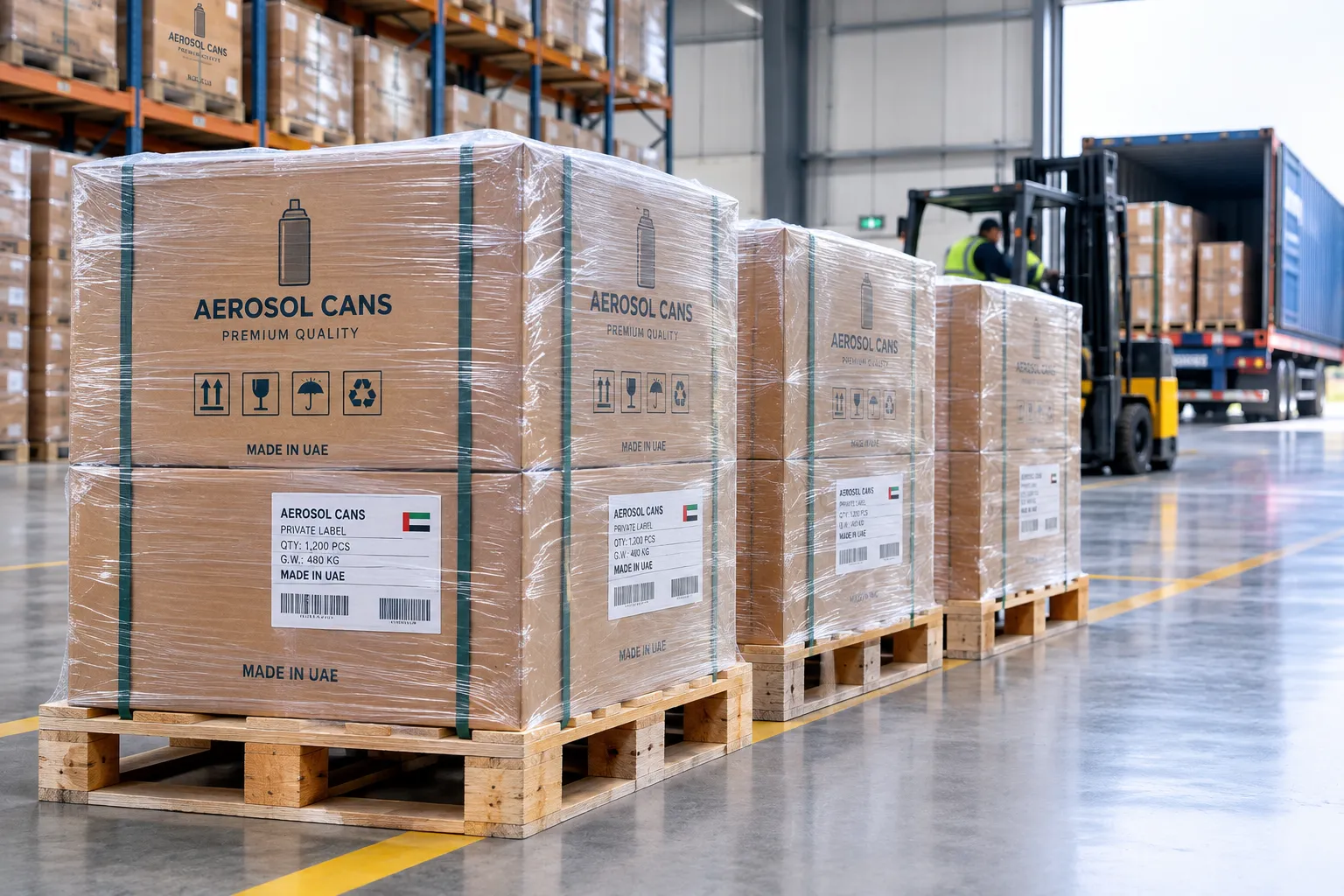
Cartons, pallets, shrink wrapping and shipping all contribute. Aerosols are classed as dangerous goods for transport, so freight, handling and documentation requirements can affect the final cost, especially for export orders from the UAE.
8. Compliance and Documentation
Depending on your target market, you may need safety data sheets, labelling that meets local regulations and other documentation. Planning for these early avoids costly changes later.
Ready to Estimate Your Own Project?
Every product is different, and the fastest way to understand your costs is to talk to the manufacturer directly. Speak with our team for a free consultation. Share your product idea, preferred can size and expected volume, and we will guide you through the options and next steps.
How to Keep Your Private Label Aerosol Costs Under Control
You cannot change every cost factor, but smart choices early on make a real difference.
- Start with a proven base formula when possible, and customise only the elements that set your brand apart (such as fragrance).
- Choose standard can sizes and valves unless a specialised option is essential to the product.
- Plan your volume realistically. Ordering a quantity you can sell within a sensible time frame balances unit cost with cash flow.
- Finalise artwork before production. Late design changes can delay schedules and add costs.
- Work with an experienced manufacturer that handles formulation, filling and packaging under one roof, which reduces coordination effort and hand-offs.
What to Ask When Requesting a Quote
A clear brief helps a factory give you an accurate, comparable quote. Prepare the following:
- Product type and intended use
- Target market and country of sale
- Preferred can size and material
- Fragrance or formula requirements
- Estimated order quantity and repeat-order plans
- Branding and printing needs
- Delivery location and timeline
Work With a Private Label Aerosol Manufacturer in the UAE
Alqaed supports brands from formulation and filling to packaging and delivery. If you are exploring your options, learn more about our private label aerosol manufacturer services or get in touch to discuss your project. Planning a fragrance or personal-care line? Take a look at our body spray manufacturer page for more details.
Frequently Asked Questions
Why don’t aerosol manufacturers publish fixed prices?
Because the cost depends on the formulation, packaging, branding, volume and testing requirements of each project. A quote based on your specific brief is more accurate than a general price list.
What is the biggest factor affecting private label aerosol cost?
It varies by product, but formulation and raw materials, packaging components (can, valve, actuator) and order volume are usually the most influential.
Does a larger order always reduce the cost per unit?
In most cases, yes. Higher volumes spread setup and changeover costs across more units. However, you should order a quantity that matches your sales plans.
Can I reduce costs by using an existing formula?
Often, yes. A proven base formula can reduce development time and testing, while you still customise elements such as fragrance and branding.
Does printing on the can cost more than using labels?
It depends on the design, the number of colours and the order size. Direct printing suits larger runs and premium looks, while labels can be more flexible for smaller runs.
Are shipping and compliance included in manufacturing cost?
These are usually considered separately. Aerosols are dangerous goods in transport, so freight and documentation should be discussed when you request your quote.
What information should I prepare before asking for a quote?
Product type, target market, can size, formula or fragrance needs, estimated quantity, branding requirements and delivery location.
Can I get a free consultation before committing to a project?
Yes. Contact the Alqaed team to discuss your idea and receive guidance on the next steps.