
Every aerosol can on a shelf, whether air freshener, body spray, car-care product or insecticide, goes through a tightly controlled production sequence before it reaches a customer. The aerosol filling process looks simple from the outside: put product in a can and add a spray valve. In practice it combines formulation science, pressure engineering and strict quality control.
This guide explains the main aerosol production steps in plain language. It will help brands, distributors and product developers understand what happens between a finished formula and a sealed, ready-to-ship can.
What Is the Aerosol Filling Process?
Aerosol filling is the stage where the liquid product (the concentrate) and the propellant are put into a pressurized container, which is then sealed with a valve. The propellant is a gas or liquefied gas that creates the pressure needed to push the product out as a spray, foam, mist or stream.
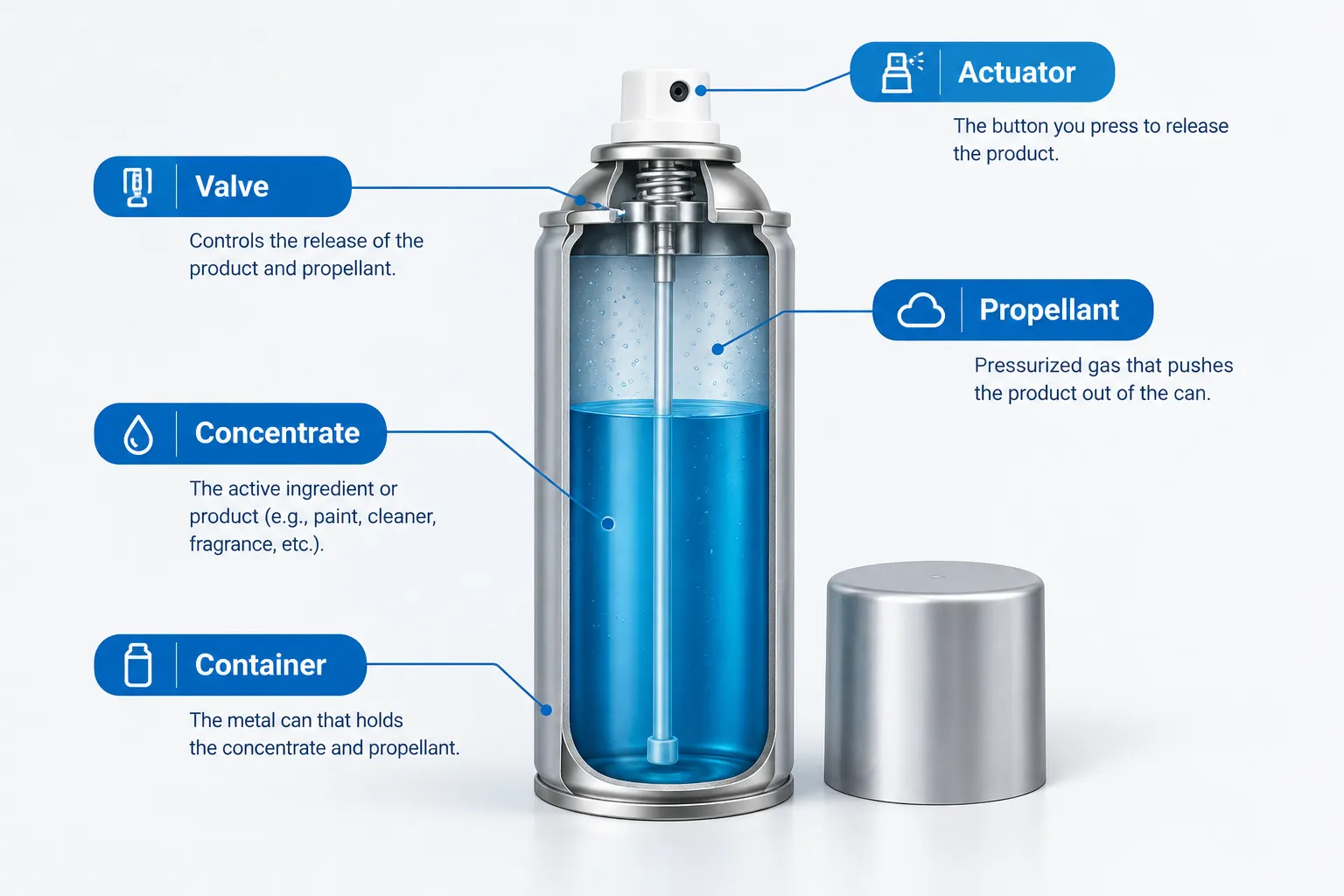
An aerosol can has four basic parts:
- The container: usually tinplate or aluminium, built to withstand internal pressure.
- The concentrate: the active product, such as fragrance, disinfectant, paint or lubricant.
- The propellant: the pressure source that drives the spray.
- The valve and actuator: the mechanism that controls release and shapes the spray pattern.
The filling line has to bring all four together precisely and safely.
Step 1: Formulation and Compatibility Planning
Production starts before any can reaches the line. The formulation is developed and tested to confirm it is compatible with the container, the valve seals and the chosen propellant. Some ingredients can corrode metal, swell rubber gaskets or clog valve openings. Compatibility testing at this stage prevents leaks, blocked nozzles and shortened shelf life later.
The team also decides the spray characteristics the product needs, such as a fine mist, a wet spray, a foam or a stream. That choice influences the valve, actuator and propellant selection.
Step 2: Preparing the Concentrate
The concentrate is mixed in a controlled batch process. Ingredients are measured and blended until the mixture is uniform. Depending on the product, this may include dissolving solids, dispersing pigments or emulsifying oil and water phases. Samples are usually checked before the batch is released to the filling line, so problems are caught before a large quantity of product is committed.
Step 3: Container Preparation
Empty cans are inspected and cleaned before filling. Dented, contaminated or damaged containers are removed, since a small defect in a pressurized can becomes a safety and quality risk. Cans are then fed onto the filling line in an orderly sequence.
Step 4: Filling the Concentrate
The measured dose of concentrate goes into each can. Accuracy matters here for two reasons. Fill volume determines whether the can meets its declared net content, and it affects the headspace left for the propellant, which in turn affects internal pressure. Automated filling machines deliver consistent volumes at production speed, and fill weights are monitored throughout the run.
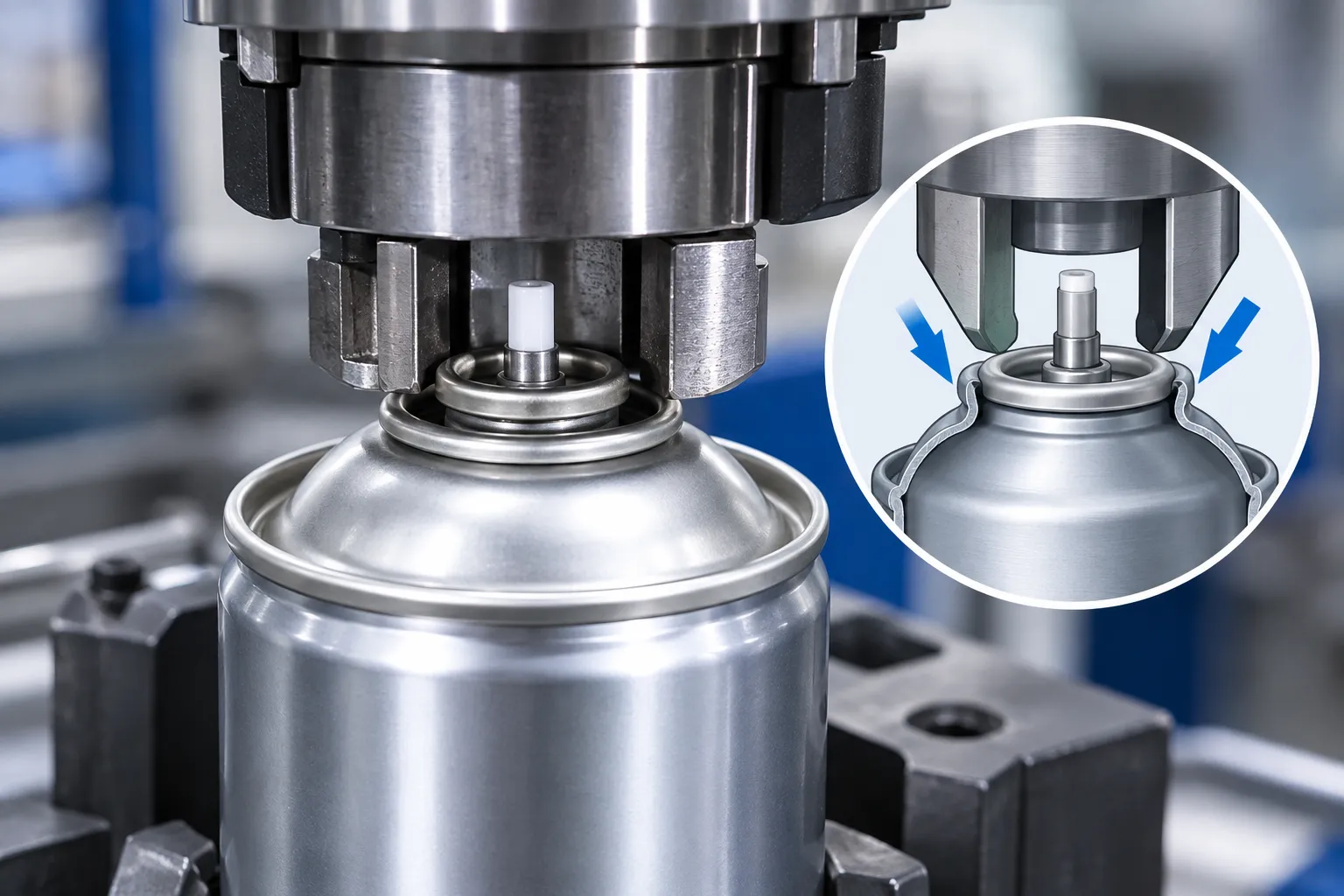
Step 5: Valve Placement and Crimping
The valve is placed on the can and sealed to the rim in a process called crimping. The crimping head expands the valve cup against the can’s opening to form a gas-tight seal.
This is one of the most critical aerosol production steps. If the crimp is too loose, the can may leak. If it is too tight, it can damage the sealing components. Operators regularly measure crimp dimensions and run checks to keep the seal consistent from the first can of a run to the last.
Step 6: Propellant Filling
Once the can is sealed, the propellant is added. There are two common methods:
- Under-the-cup filling: the propellant is introduced before the valve is fully crimped, then the valve is sealed immediately. This method is typically used for certain compressed-gas applications and specific production setups.
- Through-the-valve filling: the propellant is injected through the valve after crimping. This is the more common approach for liquefied-gas propellants because it allows precise dosing and keeps the process controlled.
Propellants fall into two broad groups. Liquefied gases, such as hydrocarbon blends or dimethyl ether, remain liquid inside the can and maintain fairly steady pressure as the product is used. Compressed gases, such as nitrogen or carbon dioxide, stay in gas form and are used in products where their properties suit the formulation. The right choice depends on the product type, safety requirements and the regulations of the target market.
Because many propellants are flammable, propellant filling takes place in dedicated, specially designed areas with strict safety systems.
Planning an Aerosol Product? Talk to Our Experts, Free of Charge
Choosing the right valve, propellant and filling method can make the difference between a smooth launch and costly rework. The Alqaed team works with brands at every stage, from first concept to full-scale production, and we are happy to review your project with no obligation.
Book a free consultation and get practical answers on formulation compatibility, packaging options, batch sizes and timelines.
Request Your Free Consultation →
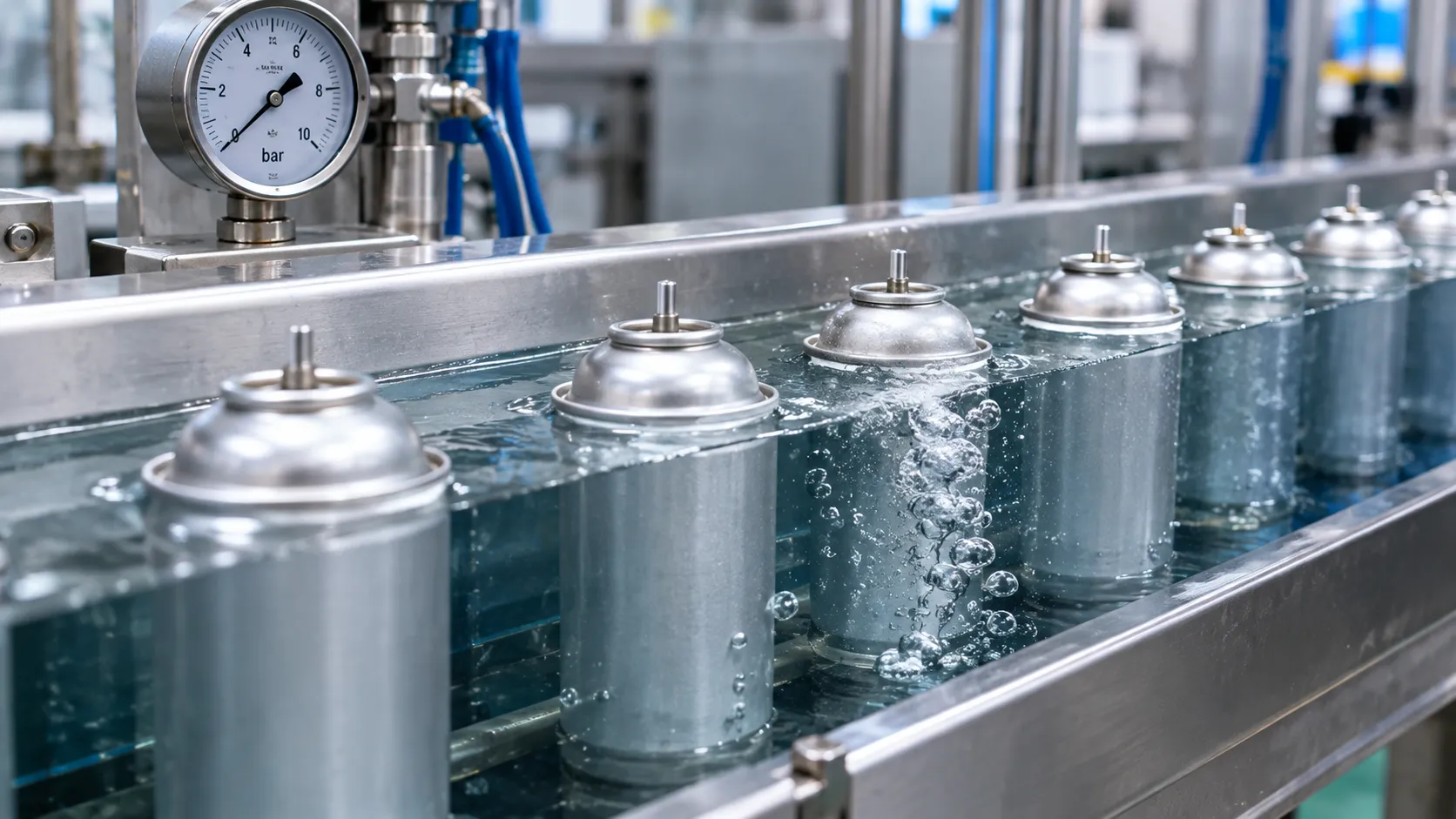
Step 7: Leak and Pressure Testing
After filling, cans are tested for leaks. A common method passes cans through a heated water bath. The warmth raises internal pressure, and any leak shows up as a stream of bubbles. Defective cans are removed automatically or manually.
This step protects consumers and brands alike. A leaking can wastes product, damages packaging and creates a safety hazard in storage and transport.
Step 8: Weight Checks and Final Inspection
Filled cans are weighed to confirm they fall within the declared fill range. Underfilled cans are rejected, and overfilled cans are checked for pressure safety. Operators also visually inspect the valve, seal and can body.
Step 9: Actuator, Cap and Coding
Next, the actuator (the button or nozzle the user presses) and the overcap are fitted. The batch code and manufacturing or expiry information are then printed on the can. This traceability is essential: if an issue is ever reported, the batch can be located and investigated.
Step 10: Spray Testing and Quality Control Sampling
Quality teams pull sample cans from each batch and run functional checks, including:
- Spray pattern and particle consistency
- Valve performance and flow rate
- Product discharge from start to finish
- Label, coding and packaging accuracy
Results are documented. Only batches that meet specifications move on to packing and dispatch.
Step 11: Packing and Dispatch
Approved cans are packed into cartons, palletized and stored in suitable warehouse conditions. Pressurized and flammable products need correct labeling and handling, so packing follows dangerous-goods and transport requirements for the destination market.
Why the Process Matters for Brands
For brands launching or scaling an aerosol product, understanding these steps helps with planning:
- Safety and compliance: well-controlled filling lowers the risk of leaks, pressure failures and non-compliant labeling.
- Consistency: accurate dosing and crimping give every can the same performance.
- Shelf life: correct material compatibility and sealing protect product quality over time.
- Scalability: a well-run line produces repeatable results across small trial runs and large production volumes.
Choosing the Right Manufacturing Partner
Not every brand has its own filling line, and building one demands significant investment in equipment, safety infrastructure and technical expertise. Many companies work with an experienced manufacturer instead. When evaluating one, look at:
- Experience with your product category
- Quality control and testing procedures
- Filling capacity and flexibility for different batch sizes
- Packaging and labeling support
- Documentation and traceability
If you are planning a new product or want to move production to a specialist facility, learn more about our aerosol contract manufacturing services.

Frequently Asked Questions
What is the aerosol filling process?
It is the production stage where the liquid concentrate and the propellant are put into a pressurized can, which is then sealed with a valve. It is followed by leak testing, weight checks and quality inspection before the cans are packed.
What are the main aerosol production steps?
The main steps are preparing the concentrate, cleaning and inspecting the cans, filling the concentrate, placing and crimping the valve, adding the propellant, leak testing, weight checking, fitting the actuator and cap, coding, and final quality control sampling.
What is the difference between a concentrate and a propellant?
The concentrate is the active product the consumer uses, such as a fragrance, disinfectant or lubricant. The propellant is the gas that pressurizes the can and pushes the concentrate out as a spray, mist or foam.
What is the difference between under-the-cup and through-the-valve filling?
In under-the-cup filling, the propellant is added before the valve is fully crimped. In through-the-valve filling, the valve is crimped first and the propellant is injected through it. Through-the-valve filling is the more common method for liquefied-gas propellants because it allows precise dosing.
Why are aerosol cans tested in a water bath?
The warm water slightly raises the internal pressure, so any leak shows up as a stream of bubbles. Defective cans are removed before they are packed or shipped.
Why is valve crimping so important?
The crimp creates the gas-tight seal between the valve and the can. A poor crimp can cause leaks, pressure loss or product failure, so crimp dimensions are checked regularly throughout production.
Is the filling process the same for every aerosol product?
The overall sequence is similar, but details such as the valve type, propellant, filling method and spray style change depending on the formulation and the intended use.
Can smaller brands order lower production volumes?
Many manufacturers offer flexible batch sizes, which suits new brands that want to test a product before scaling up. It is best to confirm minimum order quantities with the manufacturer at the planning stage.
From Formula to Finished Can: Why Every Stage Counts
The aerosol filling process is a chain of precise, connected steps: preparing the concentrate, filling the can, crimping the valve, adding the propellant, then testing and inspecting every batch. If any link is weak, the final product suffers in safety, spray performance or shelf life.
For brands, understanding these stages makes it easier to plan formulations, choose packaging and work with a manufacturing partner. If you are ready to take a product from idea to production, contact the Alqaed team to discuss your project.